|
| Group |
Round |
C/R |
Comment |
Date |
Image |
| 65 |
Mar 21 |
Reply |
It is a great lens, but since it is difficult to use, it is not my first macro lens recommendation. I am left wondering how you can use this lens without some stacking since the depth of field is minimal when I use it. Are you familiar with the works of Don Komarechka (www.donkom.ca). His macro work in general and specifically his snowflake efforts are extortionary. He almost exclusively uses the MP-E 65 mm f/2.8 1-5x lens, with stacks, where he shoots his stacks handheld (rocking back and forth to create the varied focal distances). |
Mar 17th |
| 65 |
Mar 21 |
Reply |
It is a great lens, but since it is difficult to use, it is not my first macro lens recommendation. I am left wondering how you can use this lens without some stacking since the depth of field is minimal when I use it. Are you familiar with the works of Don Komarechka (www.donkom.ca). His macro work in general and specifically his snowflake efforts are extortionary. He almost exclusively uses the MP-E 65 mm f/2.8 1-5x lens, with stack where he shoots his stacks handheld (rocking back and forth to create the varied focal distances). |
Mar 17th |
| 65 |
Mar 21 |
Comment |
|
Mar 15th |
| 65 |
Mar 21 |
Reply |
Very similar. The issue I had with the auto focusing system in the focus-bracketing R6 feature, was that many times I would miss the sharpness a the very start of the sequence, such that the entire stack was sharp EXCEPT for the vert front. Very frustrating !. I tried setting the focus point at the very start, and things got a bit better, but not consistently. I also tried adding another element at the front to give the system something to focus upon, with th4e knowledge that I would remove this element in post-processing, but that was a fair amount of work. I am still trying to work out the bugs with this relatively new feature. |
Mar 15th |
| 65 |
Mar 21 |
Comment |
Michael, welcome to the study group.
Here you nicely demonstrate a different aspect of macrophotography. When the subject is moving, this precludes the more structured approach of collecting focus slices with a stabilized camera. So here one depends upon the native depth of field of a 'stopped down' aperture, and a fast exposure. To pull this off, one requires a flash to both allow the smaller apertures and to freeze the subject. One individual I learned this technique (handheld macrophotography) from is Roman Kurywczak (roaminwithroman.com). It's a wonderful alternative when the subject in moving or you can't setup a tripod (such as in an orchid show). The technique is not perfect, but it's a great technique to have in your toolkit.
In this image you have leveraged the technique nicely. There is wonderful detail on the head, mouthparts and parts of the wing, a satisfactory falloff of detail in other parts of the critter, and a nice soft background. Here the tight crop is effective and I do not mind losing a bit of the antenna. You might have been challenged to sharply capture the entire insect as the native depth of field might be insufficient for the task, but in this presentation the critical elements are captured nicely.
|
Mar 10th |
| 65 |
Mar 21 |
Comment |
In this image I am enjoying both the overall scene, the subject clarity and the compositional flow you have captured here. I am enjoying the color palette, and the softness of the background. For the most part the subject is nicely separated from the background. However, I do find the light tan elements in the background distracting, especially in the center. To my eye, the central tan background element generates an illusion of a "glow" about the main subject. While the subject is sharp and lacks any glow, the illusion persists. Here I would have cloned out and/or darkened the lighter background elements.
I am still left to wonder though, why you felt that a multi-tiered panoramic effort was required to capture this scene. Could you obtain an equivalent image using a 50 mm lens and appropriate aperture to capture detail of the scene in one image? You do mention that the increased pixel count yields a more robust image. Personally, I would be interested in seeing some type of "before and after" example to more fully appreciate what it is that you are referring to and what the additional effort provides. This is new to me and I would like to understand your thoughts more fully. |
Mar 10th |
| 65 |
Mar 21 |
Comment |
To me this image lacks any pretense of being realistic, and as such is more artistic than photographic. The fur texture is a bit unrealistic (perhaps a bit over processed or over-sharpened) and the eye color strikes me as been a bit otherworldly. Now actually, this image may reflect reality more than I am attributing to it, but these are the impressions that I am left with as I view the image.
I hope that in the future we will see more examples of close-up and macro photography in your submissions to this study group, and less portrait shots which, to some, might be marginally considered close-up images. The definition of a close-up image is somewhat arbitrary, but here I use the loose definition of anything where the original subject is smaller than a loaf of bread. To my mind this submission is skirting the edge of the intent of this group, although others might think differently.
|
Mar 10th |
| 65 |
Mar 21 |
Comment |
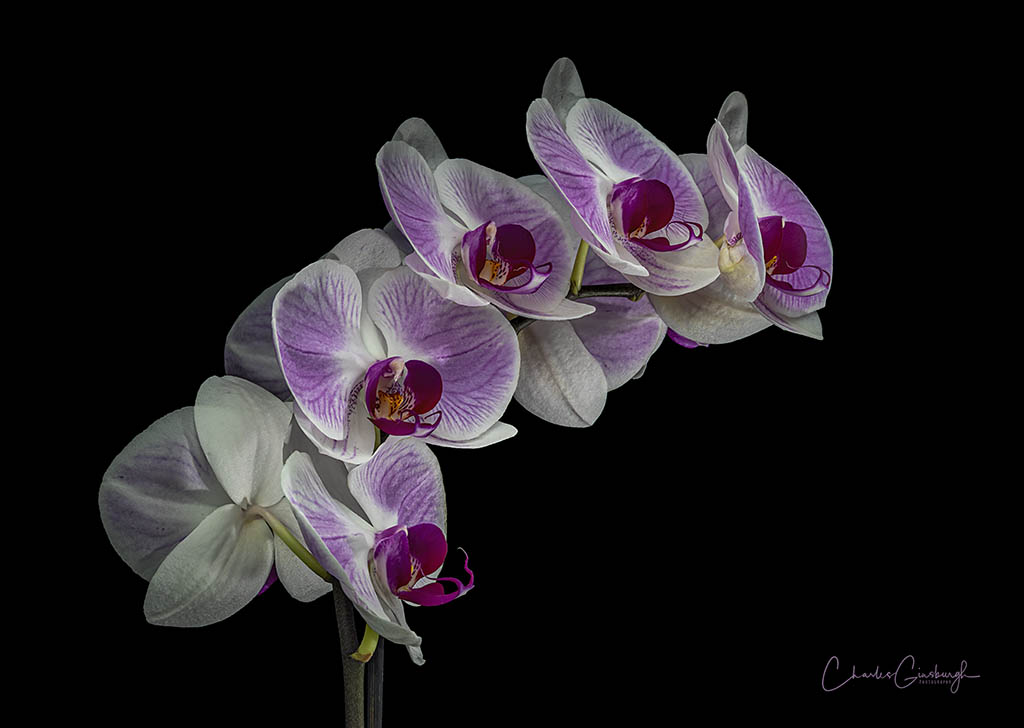
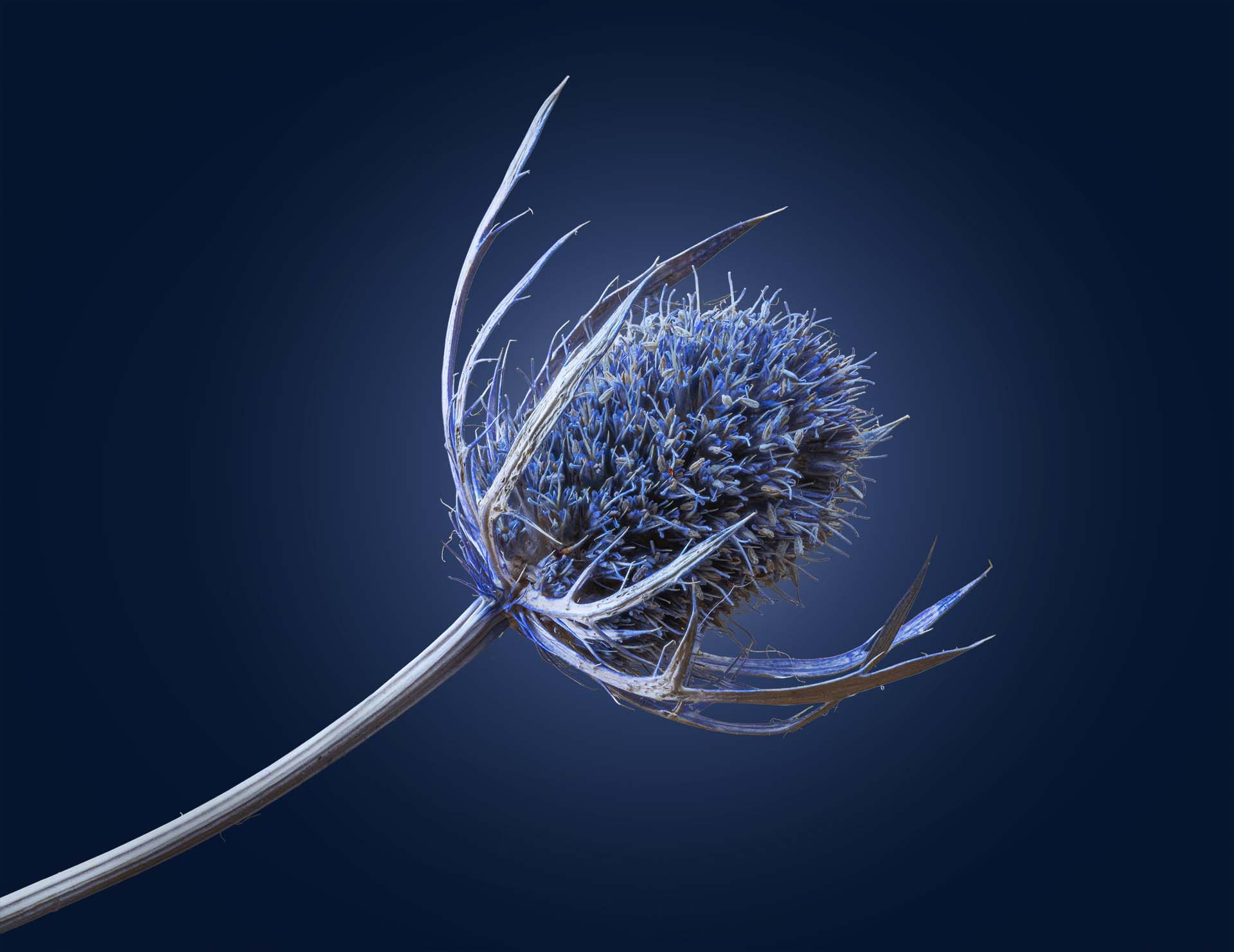
I really like the "high key" approach you have adopted here in this image. There is a simplicity here which successfully serves to highlight the central bloom. I love both the colors and sharpness associated with the bloom. Had this been my image I would have been tempted to include a bit more of the stem, including the junction of the individual branches and a bit more below that, with the goal of imparting a bit more "flow" to the composition. I also find that the actual bloom tends to blend in with the shadow of at the top, so I would attempt to make these elements (bloom and shadow) more distinct from one another (perhaps by darkening the shadow, or making it a bit less opaque). Finally, I would have liked to see a bit more in your narrative as to how you captured the image (settings), and what things you were trying to accomplish in the effort (what the settings sought to accomplish). I realize that at times it is difficult to put into words what it is that we are trying to do, but that is another aspect of our study group, putting our objectives into words. |
Mar 10th |
| 65 |
Mar 21 |
Comment |
Here you have provided us an interesting view of these "Lilies of the Valley" blooms. The blooms that are nearest to us are clearly in focus, and I appreciate that as you follow the blooms down their respective stems the blooms become less clear and pleasantly soft. This is an effective way to add some depth to the image. I do find though, that the blooms tend to blend into the background, and are less district, loosing much of their impact. As presented, I find that the sharp blooms fail to carry the story sufficiently, as it is difficult to locate and appreciate the sharp blooms. Some might feel that since the central subjects are difficult to focus upon, the whole image suffers from a lack of a central subject, and that we find ourselves casting about in search of something to latch upon. Perhaps shooting the scene from a different angle might address this situation. |
Mar 10th |
6 comments - 3 replies for Group 65
|
6 comments - 3 replies Total
|