|
| Group |
Round |
C/R |
Comment |
Date |
Image |
| 65 |
Aug 20 |
Reply |
Opps - My use of the word 'Theory' was not intended to infer that your explanation was not factual or correct. Only to suggest that knowing the reason for the diffraction may not help in overcoming it in a practical sense as you also noted above. |
Aug 25th |
| 65 |
Aug 20 |
Reply |
Interesting description as to what might be occurring. However, functionally it hard to convert this theory into functional information (such as "will this occur to my lens, and if so, at what f stop?"). The best thing is to test your lens for sharpness at different f stops and see what happens |
Aug 20th |
| 65 |
Aug 20 |
Reply |
To my eye while this might be interesting for documentary purposes, it is too grainy and 'over sharpened" looking. There is a limit as to what cropping and magnifying a part of the image can do well. |
Aug 20th |
| 65 |
Aug 20 |
Reply |
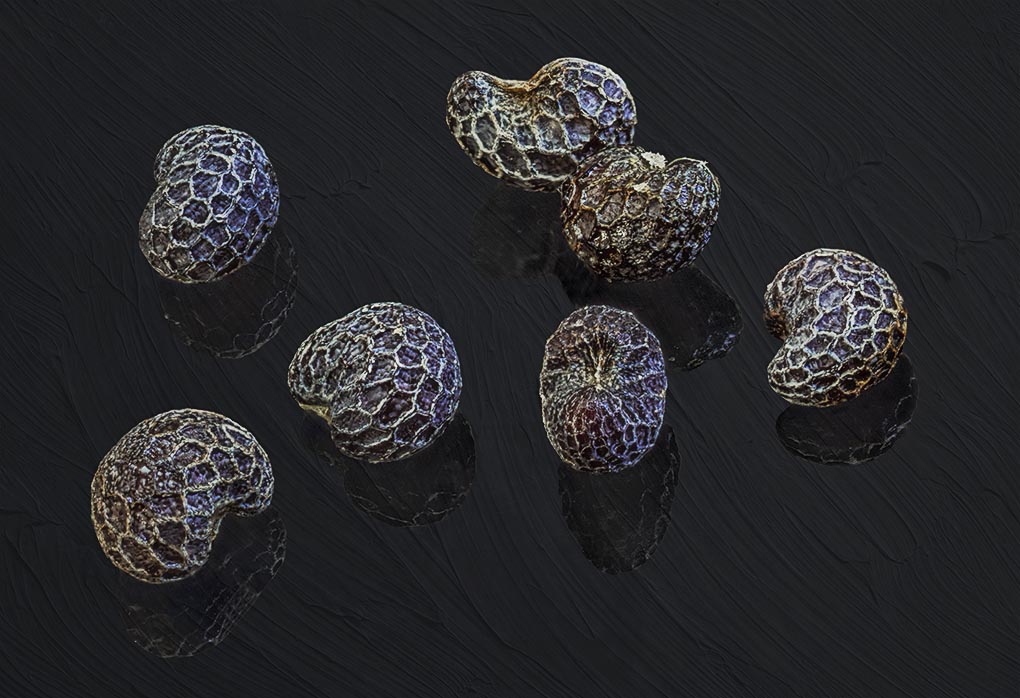
Since it's nearly as much effort to take 15 shots as it is to take 30, so why not ?
I don't disagree that the might be very small "less than sharp" areas on the peppercorns (if you really look hard), but let me ask 'does in matter?'.
An image only needs to be as sharp as it needs to be to convey the story of the photographer's vision.
Food for thought since there is no right or wrong answer ... |
Aug 16th |
| 65 |
Aug 20 |
Comment |
I like this version a bit more. Nice Job in listening to the comments and try out different things. |
Aug 16th |
| 65 |
Aug 20 |
Comment |
Here you have given us a completely different view of these water drop collisions. In this image, the aftermath of the event, well after the actual collision, is emphasized here, so we see yet another side of the collision event. I'm am enjoying the sinuous quality of the liquid splash show here and the energy implied in the drop dispersals.
Shooting milky water is difficult in that the exposure is difficult to master, and it is easy to lose detail in the white water base. I see there here in this image as well. I find that in adding just a bit of color to the milky white liquid base this makes it easier to retain the base detail. I do find that after a few drops though I do need to change out the base liquid, so this can be a pain.
While it is true that in not including more of the liquid base that these spires emulate from, the editing is easier. However the context of the collision event is lessened the image becomes more of an abstract. To my mind, this sacrifices some of the essential impact of these types of images and is not something I would be willing to do.
|
Aug 14th |
| 65 |
Aug 20 |
Comment |
What a great image of the up-close-and-personal view of this critter. I think that the relative proportion of the head vs. the background was very effective and I am enjoying the color and texture (softness) of the background and how the color palate between the lizard and background blends nicely.
I am not so sure that the treatment of the tongue was effective. Perhaps letting it blur slightly might have been a bit more effective and believable. Would it be tact sharp, no, but it would be believable if it were not since we expect that the tongue might be in continual movement so this would make sense.
There is a bit of differential sharpness in this face. I might sharpen around the eyes and in the yellow region behind the nostrils, without adding to the sharpness on the lower half of the face (High pass sharpening in the Vivid Light blend mode at 30 % with masks in PS CC) might balance this aspect some.
Aside from these minor points, and great portrait of the colorful critter.
|
Aug 14th |
| 65 |
Aug 20 |
Comment |
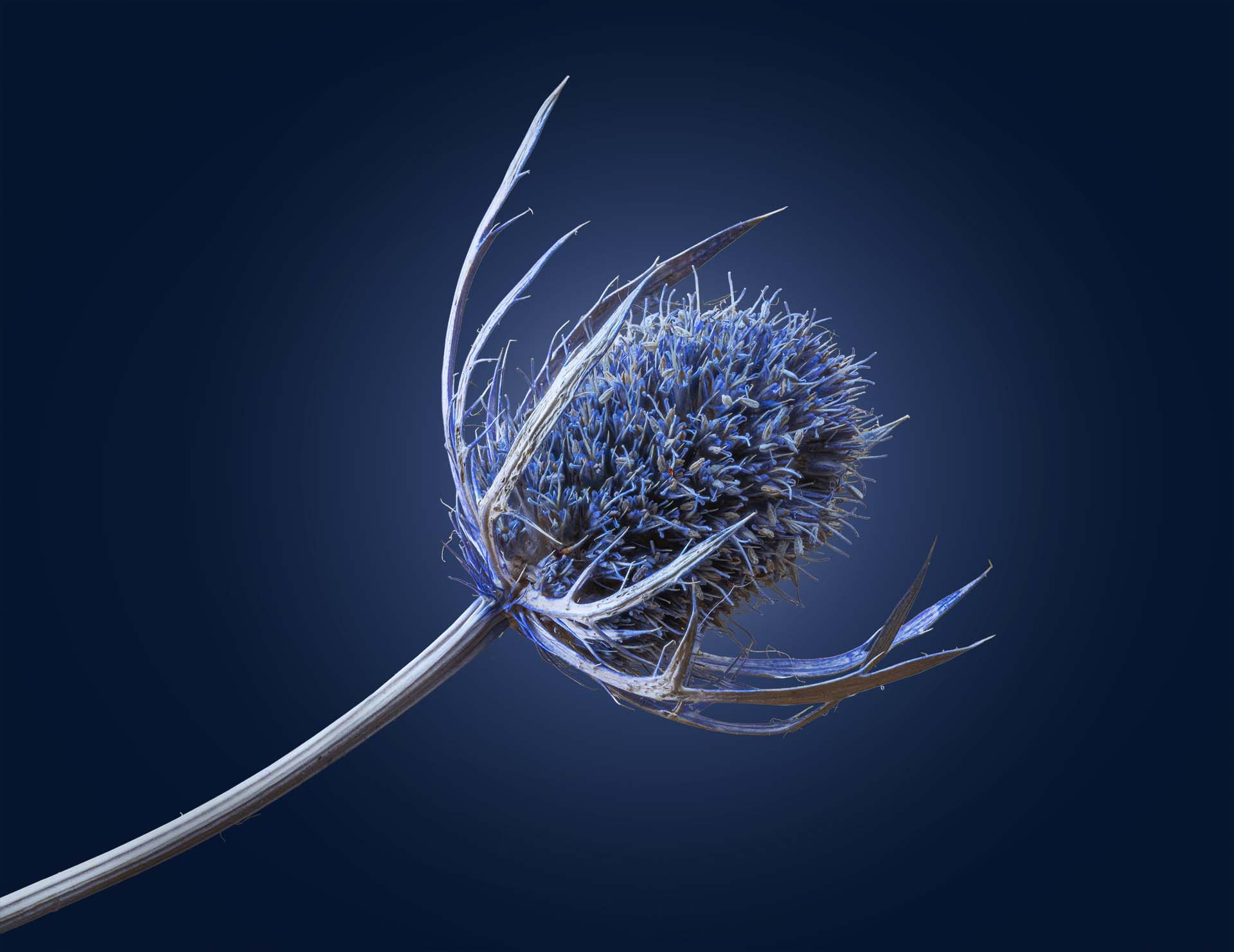
I love this macro image. If really enhances our view of this complex bit of nature in a way that we otherwise may have missed. I love the red background and how it complements the color and detail of the "weedy/seedy" thing (for lack of a more descriptive label). The detail in the stem with it's inherent complexity of seeds and stems offers a wonder tableau of color and shape to enjoy.
I do find that the composition appears a bit static, as the plant just appears from the side without reason or connection. I prefer Peter's suggestion of presenting this at a bit of an angle, although I might try not to have the plant emanate directly from the corner. Try a few different angles and see what you think. The inclusion of the special highlight in the background is a maker's choice. My inclination would be to remove it since it adds a bit of distracting complexity that I do not feel is required.
I disagree with Peter's contention that the image is not a sharp as it could be. To my eye, it is as sharp as it needs to be, to convey your story. One thing about asking four photographers for their opinion; you get six different options back, so this is just one thing we all need to deal with.
Great example of taking a commonplace item and giving it back to us in a special and unexpected way. Nice job.
|
Aug 14th |
| 65 |
Aug 20 |
Comment |
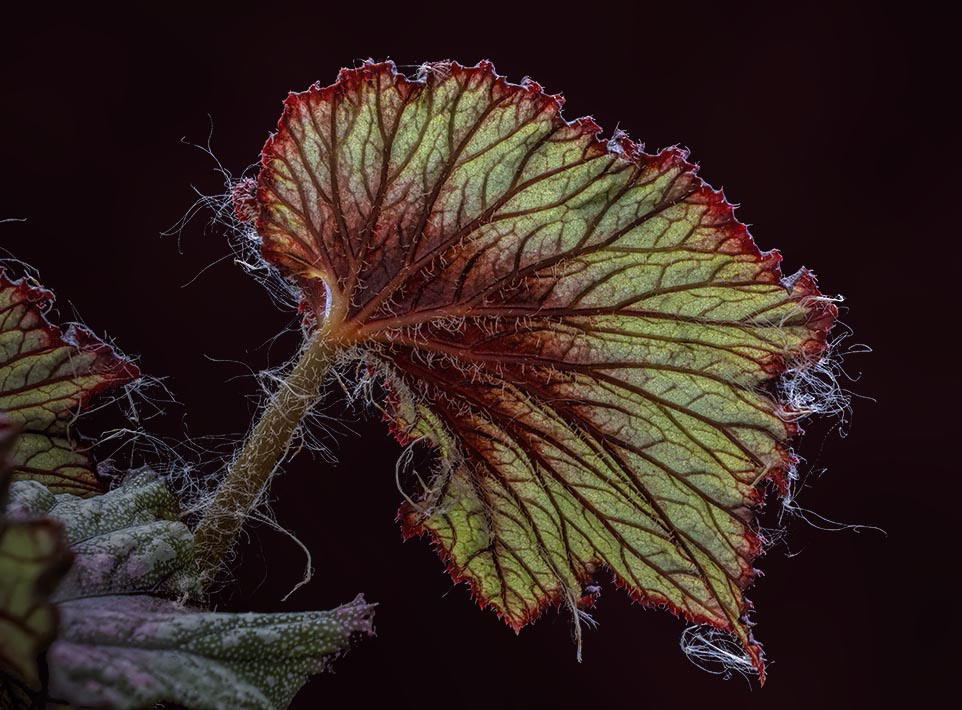
What a fun shot. I love taking these 'simple' scenes and transforming them into something special, like you do here. To my mind, that is one of the hallmarks of Macro Photography. I really am enjoying the colors and their transition from one to another. Your composition if also quite effective, in how the veins lead the eye around the image.
The overall image appears to be a bit soft. "But wait" you say. I used focus stacking so why is that so? This leads me to a suggestion regarding your focus stacking. Since you are using the stacking process as you primary method to achieve sufficient depth of field, I suggest that you choose an aperture best suited for the lens, not as a tool to gain depth of field. In this image, you used f/32 (presumably in an effort to gain more depth of field) and in doing so, you most likely were operating at the edge of your lens's performance range. At high aperture values such as f/22 and f/32 (small openings within the lens) you often see a distinct sharpness loss where at smallest the lens opening, you lose image sharpness. This is called lens diffraction (for a more technical discussion see http://www.bobatkins.com/photography/technical/diffraction.html). I suspect that this may be why your stacked image is not as sharp as one might expect with a focus stacking effort. In all of your focus slices, the diffraction resulted in softer images, so the stacking software did not have sharp edges to work with. Here I suggest that you employ an aperture of f/8 or so. I suspect that your lens might work best in the f/8 - f/10 range (most do), Let the focus slice collection / stacking process do the work in generating your depth of field here, not the lens aperture. This is one of those cases where Macro Photography differs from normal shooting.
This is a bit counter intuitive, but it often yields better results. When possible I try to avoid extreme settings with my lens to avoid similar issues. Can you push a lens to perform at the extreme settings, yes but the chances of encountering issues such as lens diffraction are greater when you do so.
|
Aug 14th |
5 comments - 4 replies for Group 65
|
5 comments - 4 replies Total
|