|
| Group |
Round |
C/R |
Comment |
Date |
Image |
| 65 |
Jan 20 |
Comment |
I realize how difficult it is to capture these images so kudos to you and your efforts. Here not only have you given us this wonderful capture along with it exotic colors but you have emphasized the subject with your close up presentation. To my eye this is all a bit overwhelming, since not only are we to appreciate the structure and form of the collision along with it's exotic colors, but you have also emphasized the novel textures and patterns in the water background as well. That a lot to take in, and the textures and patterns begin to compete with the collision form and texture. It's a bit overwhelming to my eye. I don't disagree with Vinod's comments in that I to would like to have seen a bit more of the environment that the collision is in. Finally, I am distracted some by the graininess of the background as well. This graininess is often seen when we enlarge (and crop) the image a bit too much as begin to run out of the actual image information (pixels) and suggest that here too, that might have been the case. |
Jan 28th |
| 65 |
Jan 20 |
Comment |
In macro photography we often get seduced by the thought that our images must show the "small things", and so we often try to "stretch" our images to meet that expectation. In this image you started out with an image in which the subject was a rather small part of the image and cropped it bring the subject into more focus on the small subject. Here the result are "OK" (to my eye), but lacks the sharpness and detail that macro photography is known for. Most of the subject is in focus, but we loose detail in the back wing and back legs.
Here you have discovered an important issue with macro photography. That being the challenge of getting everything in focus (or insufficient "depth-of-filed).
Images where the subject is larger than the camera sensor (roughly the size of a postage stamp) decreasing the aperture (increasing the f stop number ) in impact and increase the apparent depth of filed. Photography of these size subjects is often referred to as "Close-up Photography". When the subject is smaller than the camera sensor is often referred to as "Macro Photography", and here decreasing the aperture has little or no effect upon increasing your depth-of-field. This effect becomes more pronounced as you increase your magnification. That is when we often need to try other techniques (such as focus stacking) to give us sharp magnified images. In this image you are bordering on that transition point, so getting sufficient detail across the entire subject is challenging.
Perhaps if you were able to get closer to make more of the subject fill the frame, more detail and micro contrast within your subject might result. However, you also run the risk of scaring the critter away. That is where higher focal length macro lenses (150 - 180 mm or so) come into play. With these lens you get greater magnification from larger distances, at time essential when attempting to capture skittish subjects.
Welcome to the world of Macro photography. Hang in there and keep on trying. Thant is how we discover and overcome the challenges in this field.
|
Jan 15th |
| 65 |
Jan 20 |
Reply |
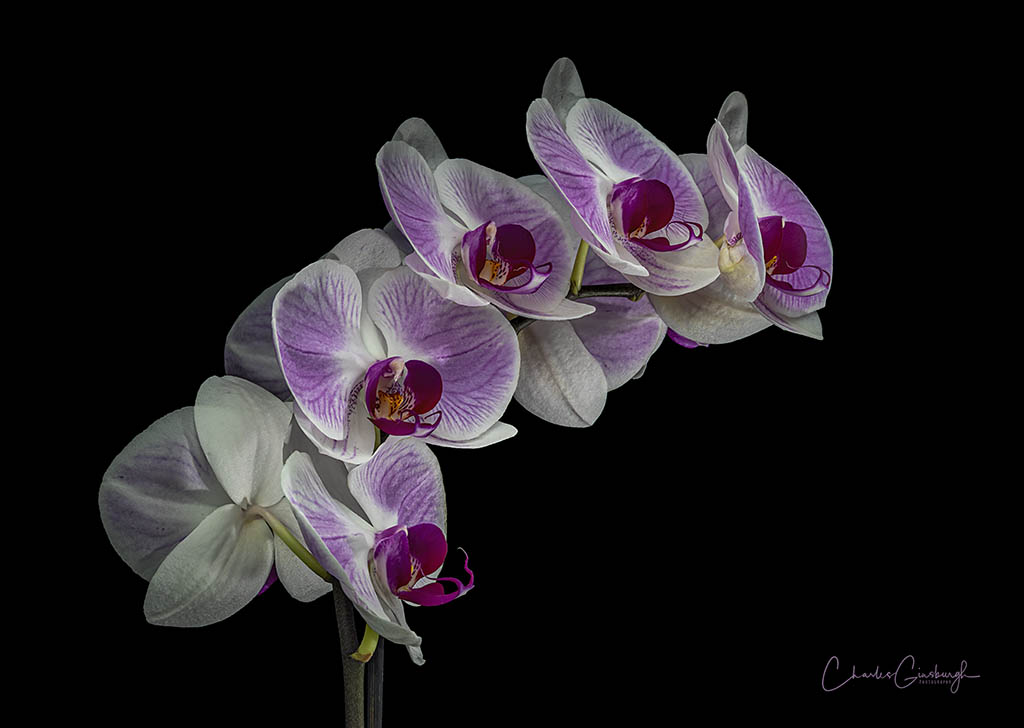
Opps ! - Its an orchid, and not a dried rose. Cut-paste error on my part. Thanks for catching the error. |
Jan 15th |
| 65 |
Jan 20 |
Comment |
Nice capture of this busy little critter. Here you given us a great, clear up-close view with a lot of the native associated detail, not an easy task given the constant movement these guys employ.
To my eye this images has a bit of gritty feel to it. Some of this may be due to the noise noted earlier, and I don't disagree with those comments. Also there is a bit of a halo around the bee, especially around the wings and front appendages around the head (whatever they might be called). Some of this may be due to the cropping form the native image. Was the image cropped significantly to bring more focus upon the bee? However some of this feel might also be due to the spotty nature if the pollen scattered about the bee.
If this were my image I would be tempted to move out just a bit, making the bee a bit smaller relative to the entire image. This might present the bee a bit more in his native setting, and reduce a bit of the "in your face" feel I sense with this image.
Just my thoughts …
|
Jan 15th |
| 65 |
Jan 20 |
Comment |
What a wonderfull view of something we might just overlook and pass by. You have accomplished something here that I strive in my own macrophotography, to make the common place, uncommon. Well seen and well captured.
I am especially enjoying the cool, fresh color pallet these greens impart. The composition is excellent with a pleasing set of leading lines and curves (as noted earlier). I respectively disagree with Vinod's comments regarding the noise. In this case I feel that it adds just a note of texture which fits in effectively with this image. I think that we need to be aware that we can make our images look "too perfect" bordering on the artifactual, and this can distract from our presentations. I know that I have been guilty of doing just this and recently have been adding a bit of texture back into the background of some of my images.
Just my thought and I would be interested in hearing from the jest of you regarding this point.
|
Jan 15th |
4 comments - 1 reply for Group 65
|
4 comments - 1 reply Total
|