|
| Group |
Round |
C/R |
Comment |
Date |
Image |
| 32 |
Jul 21 |
Reply |
Excellent. |
Jul 8th |
| 32 |
Jul 21 |
Reply |
thanx......w |
Jul 8th |
| 32 |
Jul 21 |
Comment |
The attached is an essay prepared for another ph Club. Opinions welcome
To "Take" or "Make" a Photograph: An Essay by Wes Odell
If you, kind reader, have gotten here, you most likely have a serious interest in photography. The following brief essay is based on years of Gallery Curating, Photo Judging, and Photo Teaching, plus a lot of reading of "the literature." The genesis of this essay was when a Professional Curator and Judge was discussing the Texas Photographic Society's (TPS) results and awards at a Members Only Show. She said that "whenever I judge photos I need to remember the difference between a Photo of a Beautiful Subject vs. a Beautiful Photo of a Subject."
The former category, "Beautiful Subjects," includes record shots, images that could be postcards, and snap shots. These are the kind of subjects that "anyone" could "go and take" given the same season and weather conditions. Many photographers seem to have a "fast food" mentality. The photographer sees an image, grabs a camera, and snaps a couple pictures. Then back to the car and off to the next item on the menu. At the end of the day the memory card may be full, but what of the quality of those images?
The "Beautiful Photographs" differ in some artistic or compositional aspect and have a story to tell; and would be difficult to replicate by another person. I.E., "one of a kinds." These are the ones to whom this Judge would give, and did give the awards. Have you heard or have you as a judge said, "I've seen this image/or view before, so what makes it different and winnable?"
This delineation in no way is intended to disparage vacation, event, record, happy snappy, and grab shots, because a photograph is intended to be a memory "rememberer" of an event, or people gatherings, as examples. And, most importantly, one needs to remember that it takes only ONE PERSON to like a photograph to make it a GOOD Photo. It's all in what the objective of the photographer was when "Taking" the photograph. If the picture satisfies the objective, then it is a good photo. But it may not win a prize in a Photo Contest. And, we must remember that all photos taken are not intended for competition, but for many other valid reasons as well.
But for those of us whose practice is Photo Competitions, "Taking" a picture usually doesn't make the grade. One must "Make" the photo. (None of this is related to what we call "post processing," but relates to "work in the field.") Discussion follows:
Though impassioned photography is desirable, one needs to be able to distance oneself from that passion in order to objectively "Make" the composition and tell the story. (It is sometimes now referred to as "gesture.") The job is to take the fragments of scenes and organize them in such a way that the chaos and haphazardness of the situation (e.g., nature) are expressed in a simple, orderly manner by selecting those elements that will best describe the subject as you wish to capture it. And, leaving out or compositionally removing those elements that don't support your Primary Subject (or Story) by just altering the Point of View. (Get higher, get lower, move left or right, closer, further, Landscape format vs. Portrait format, long focal length vs wide, backgrounds and foregrounds, etc…… And perhaps a decision to come back another day when the weather and time of day are friendlier.) This is indeed not the arena for happy snappies. Time and contemplation are your friends. Some have said that if "it" doesn't support the subject, then it detracts from the overall image.
Start by "Defining your subject." Ask yourself, "What exactly is my subject?" "What attracted me to this subject?" "What makes it special and unique?" Unique is good in the eyes of many Photo Judges. Sweep the edges and the background of the image which are the places that most damage is done to a good photo. (e.g., a bright leaf or a piece of trash, (i.e., an "artifact") an unwanted fence, an intruding branch, an item/artifact that could be a competing element to the primary subject. Be like the farmer who "walks his fences each morning," and sweep the perimeter of your eyepiece for unwanted elements and eye-snags. Take the time to view your subject from different angles and try placing the subject in different positions in the frame. Sometimes, just a slight shift in camera placement can make your image work. Again: Bad backgrounds can and more often than not, do ruin wonderful images. Consider your depth of field and change your focus and focal length settings if beneficial. Placement of the subject, including Curves and Diagonals needs to be considered. Are objects that are best when sharp, really sharp enough, and did the blurry objects get relegated to the outer edges such as a bokeh background or selective focus for blurry foregrounds. Think about what you may have to do in post processing when you get back to your lab. Would HDR or Focus Stacking help? If so, get the additional images NOW. Don't just snap and walk away.
It is not easy to develop a photographic style that exhibits both science and poetry. Poetry enters photographs by way of the creative soul but is facilitated by technique. Eliot Porter said that a true work of art is "the creation of love; love for the subject first and for the medium second." It means achieving a kind of intimacy in our images; to provide information about and convey our love for our subjects, so that they will be appreciated by our viewers.
In summary, successful photography requires the grasp of technical and compositional knowledge combined with the ability to capture the poetic, or the story. Science, knowledge of light, and one's equipment, are essential, but it is poetry that will carry that image to a higher, more emotional, and thus more successful level. (Take or Make: Your choice.)
|
Jul 7th |
| 32 |
Jul 21 |
Reply |
Yep, the snow is white white, but as I darken it the horse doesn't stand out as well, so I left it white white.
|
Jul 7th |
| 32 |
Jul 21 |
Reply |
The area where I found this image was near to our home (an hour) and the roads were clear, a nice day, and just wandering in the dirt roads just off the highway. The horse was tethered by his owner a Latin American herder who was camped nearby. Just one of those interesting scenes and fortuitious that I saw it. I used to do a lot of scouting for interesting places for a deer hunt. This was one of those days. |
Jul 7th |
| 32 |
Jul 21 |
Comment |
Well done. I think Tom's realignment is an improvement.
I use Helicon Focus, not too expensive and so super easy. |
Jul 7th |
| 32 |
Jul 21 |
Comment |
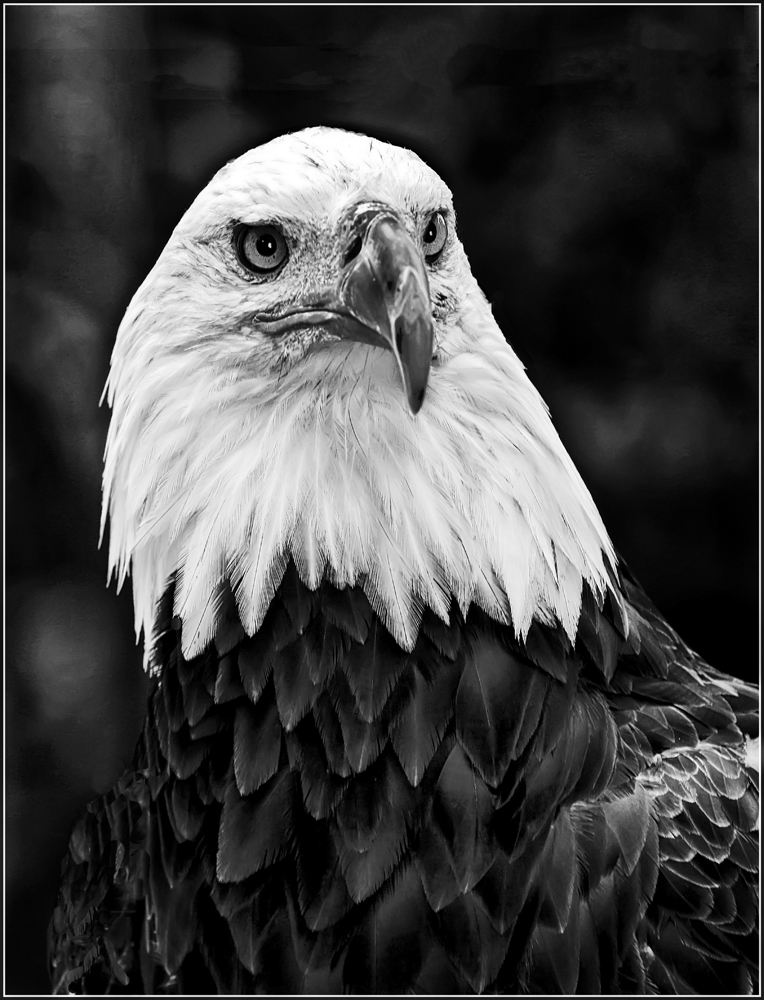
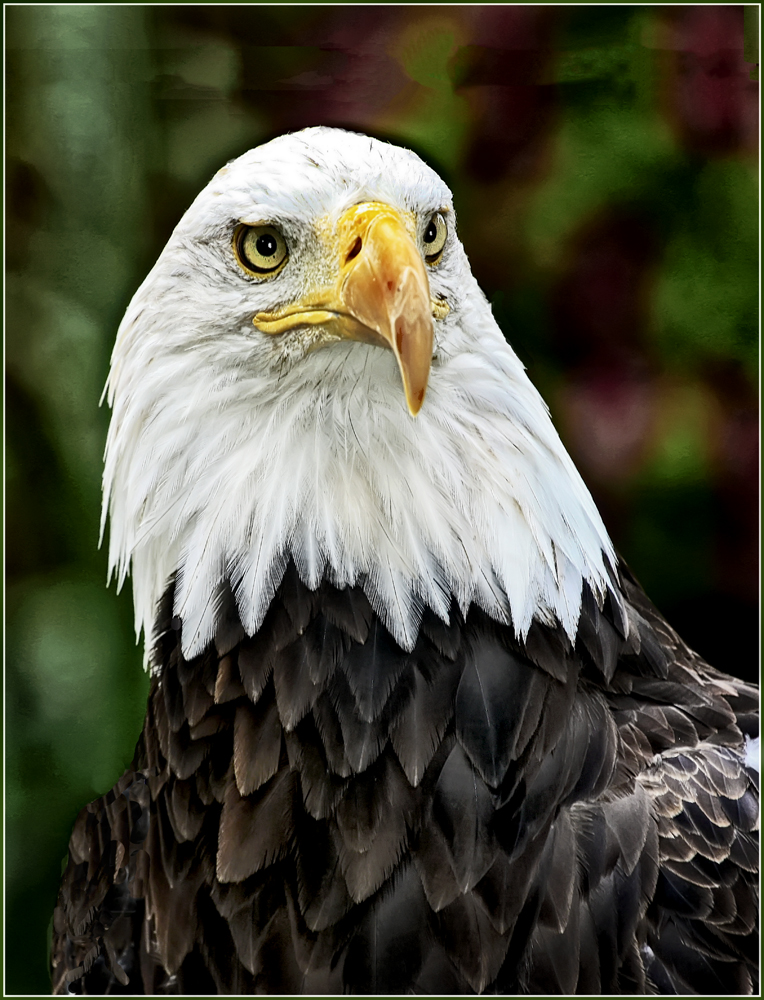
Another option for the background is to make it lighter. I did a quickie with the Magic Wand so the edges didn't come out properly, nor did I do below the hose. Very nice capture image of the bird. |
Jul 7th |
 |
| 32 |
Jul 21 |
Reply |
I think I and others may not have thought of the natural camoflauge of wild animals that enables them to blend in. good comment. I guess that's why wildlife is such a difficult subject to photograph. |
Jul 5th |
| 32 |
Jul 21 |
Reply |
Yep, First Snow, which when it falls in the SL Valley area usually melts. When we had a cabin at 10k ft in Colorado, we'd always leave after the first snow, but before the second one comes...... it stays until May or early June. |
Jul 5th |
| 32 |
Jul 21 |
Comment |
I found a way to improve my photo prints: Get more expensive papers, such as the many varieties of Hahnemuhle Baryta. Red River has three excellent papers in their "high end"..... UltraPro Luster 300 #5208, Palo Duro SoftGloss Rag #1306, and their Baryta.
Hahn.... has two nice Sample Packs: Glossy Fine Art, and Matte Fine Art. |
Jul 5th |
| 32 |
Jul 21 |
Comment |
Fascinating. Good that you are able to capture the moment before the bulldozers get there. The beauty of both color and mono versions are the stories that come to mind while viewing it. The image captures my eyes and won't let go as I think of the history of this storybook-image. Both color and mono are very nice. Lots of things that you could do to enhance contrast and tonalities, but I think the story is more powerful than the image.
|
Jul 5th |
| 32 |
Jul 21 |
Comment |
Increasing the contrast and simplifying the image, as suggested, is an improvement.
As I mentioned in comment to Russ, the colored filters can do a wonderful job, or so I read in the Michael Freeman book "Mastering black and white digital photography." I found it to be a fascinating read, not as good as a book by Robert Ludlum, but it presented so many different processes and tools that I was impressed. But: too complicated for me. If I had another ten years, I might give it a try. ISBN if interested is:1-57790-707-5 and probably available used via Biblio.com |
Jul 5th |
| 32 |
Jul 21 |
Comment |
Agree that more contrast to separate the owlet from the background would improve the impact and viewability. I've read how to do this with colored filters, but have not ever done it. Stephen's rendition is the direction to take. Always exciting to see "new" wildlife, especially in one's yard. Congratulations on capturing it in color. |
Jul 5th |
| 32 |
Jul 21 |
Comment |
You straightened up nicely, the "leaning tower of Amsterdam." The Contrast approach is excellent. The slanting base is indicative of a street that has a slant. I believe it is the building that matters. Re your question about a vignette: How about a narrow black and then a white stroke? It would set it off in a projected judging. |
Jul 5th |
| 32 |
Jul 21 |
Reply |
Thanks. I wouldn't have taken the shot if the horse hadn't been there. And: Looking at me. I wonder what it was thinking, or hoping?...... that is the story I saw. |
Jul 5th |
| 32 |
Jul 21 |
Comment |
4th try:
Aha!!!! the jpg that wouldn't load was larger than 1 Meg. Here it is. |
Jul 3rd |
 |
| 32 |
Jul 21 |
Comment |
I don't know what's going on. I sent it to Diana. I just did a Choose file (a jpg) and it doesn't come along. Dunno. |
Jul 3rd |
10 comments - 7 replies for Group 32
|
10 comments - 7 replies Total
|