|
| Group |
Round |
C/R |
Comment |
Date |
Image |
| 2 |
Aug 23 |
Reply |
Judith, Thanks for visiting our little group to see my image this month. Your image was stunning.
I grew up in a western Chicago suburb (Downers Grove), but it had been a very long time since I had been back there.
Just as an FYI (after reading your Bio), I now have a son and his family just living just outside of Lexington in Versailles. Beautiful area! Small world. |
Aug 16th |
| 2 |
Aug 23 |
Comment |
Love it!! |
Aug 9th |
| 2 |
Aug 23 |
Reply |
That's High praise coming from you, Martin. Thank you . |
Aug 9th |
| 2 |
Aug 23 |
Comment |
Martin,
After reading the comments for the other group members, and viewing the three originals, my choice would be for the more dramatic positioning of the head - and simplicity of the background - in image #3.
You could easily crop in the same as the original posted image, but not have to mess around with any post processing deletions or darkening.
Black/White would work very well on that one (as it does so well in the posted version).
Good eye for your street photography efforts! |
Aug 8th |
| 2 |
Aug 23 |
Comment |
Shirley,
Night sky photography is a whole new aspect of photography.
The general rule for keeping the stars from beginning to elongate/blur is the rule: 1/your focal length. Many times, as a photographer would use a wide angle to get as much of the sky as they can, so (for instance) a 24mm focal length should have a shutter speed of "no more than" 24 seconds - at a high ISO like 1600 or 3200. 15mm should be or longer than 15 seconds.
There are many instructional night photography videos on line that help describe the process - as well as post processing. The ultimate catch with Mily Way photography is capturing the "Galactic Core", the must star-dense and brightest portion of the Milky Way. You may have captured it in your image, but it's hard to tell from your processing. There are ways to determine timing in your area and where (and when)-in-the-sky it will be. Photo Pills is a good/great app for when and where.
Post processing is another technique you need to brush up on to bring out the best and brightest in the galaxy.
Your image is a great start for a first timer. Foreground elements like your trees are good for reference.
It's fun trying new things. |
Aug 8th |
| 2 |
Aug 23 |
Reply |
That's High praise coming from you, Martin. Thank you . |
Aug 8th |
| 2 |
Aug 23 |
Comment |
Shirley,
Thanks for your comments.
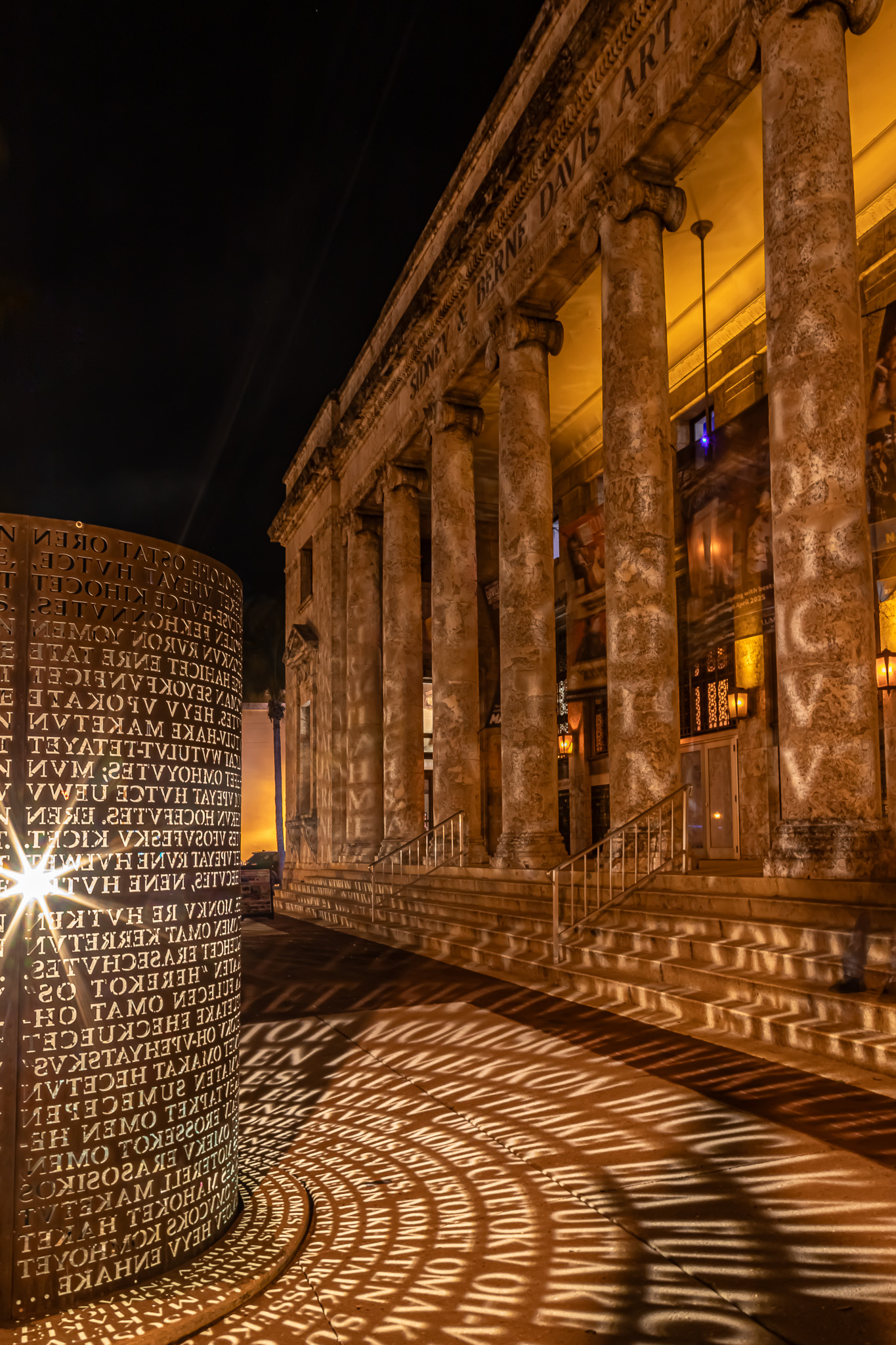
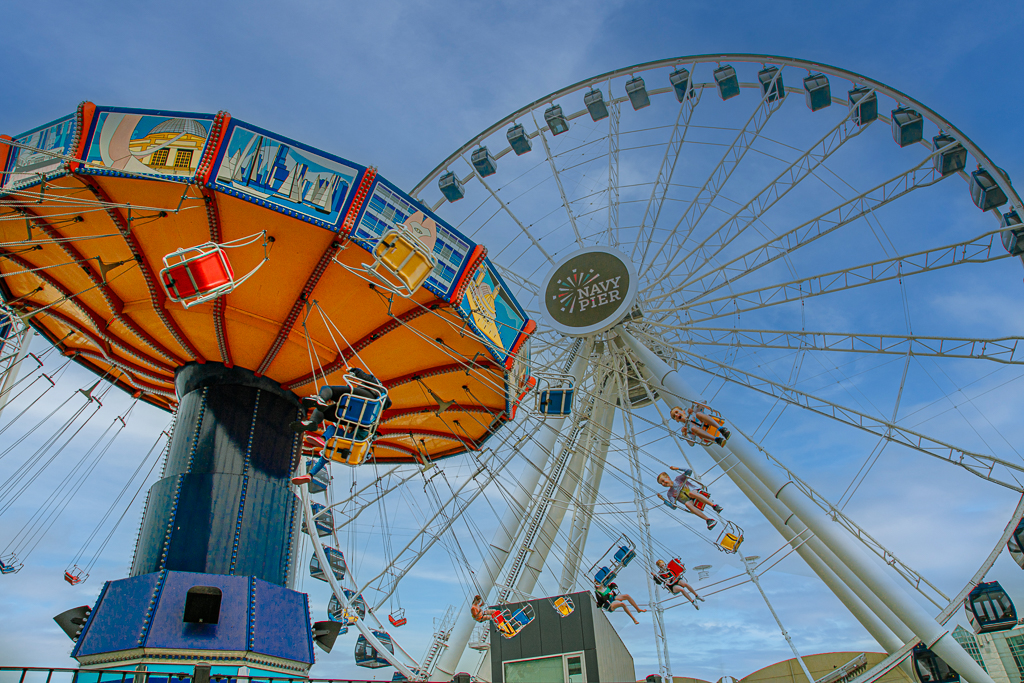
As I mentioned in other comments, the composition was very intentional. I love the interplay of all the lines.
I, too, used to go to Riverview Park. The Air B&B we rented for our family stay in Chicago was on the near north side, and was near Western & Belmont Avenues - the tag line in their advertising re:location. Fond memories. |
Aug 8th |
| 2 |
Aug 23 |
Reply |
Thsnks |
Aug 3rd |
| 2 |
Aug 23 |
Reply |
I like the revision. The distractions are gone.
I, too, like to occasionally add a creamy-ness to the background, but in this case, the bud in question (appeared) to be so close to the plane of focus that, I feel, it needed more attention. |
Aug 3rd |
| 2 |
Aug 23 |
Comment |
Karen, welcome back.
This is a beautiful image of the Dahlia. But, as Piers pointed out, there are elements that are a bit distracting - the bright spot in the upper RH could be toned down, and the bud that's peeking out from the upper LH of the flower needs its own space, since it's in a co-starring role in this story. A very slight movement of the camera to the left would have brought the bud out into full view and help make this image even better.
The f3.2 aperture might too wide-open. Overall, I like the Bokeh. When you have your next chance, play around with varying apertures to get the buds in stronger focus. |
Aug 3rd |
| 2 |
Aug 23 |
Comment |
As a rookie "birder" who winters in SW Florida, I am very familiar with the Yellow Crowned Night Heron. So, this is a nice looking cousin.
It took me a litle bit of looking back and forth between the two images to realize that this is a set of sequential images, and not just one image being modified or manipulated.
To me, the absence of either the stolen fish, or the head of the marauding bird, leads to confusion as to what the story is. |
Aug 3rd |
| 2 |
Aug 23 |
Comment |
Thanks for your comments, Piers.
The composition of the overlapping circles was a must-do long before I clicked the shutter. I knew that had to happen and I sought out the best vantage point to make that happen.
It was not until I dropped in the new sky that I realized the classic compatibility of the Blue with the Orange.
|
Aug 3rd |
| 2 |
Aug 23 |
Comment |
Karen, welcome back to our group. We've missed you.
Thank you for your comments.
The sky was one of photoshops standard images, so I figure that anyone who knows the sky package would recognize it. I wouldn't enter it in a competition that didn't permit this type of manipulation, but I pleased with the results.
Looking forward our back and forth banter about the images. |
Aug 2nd |
8 comments - 5 replies for Group 2
|
| 52 |
Aug 23 |
Comment |
Judith, I enjoy all aspects of photography, and am involved in The PSA Digital Dialogue - Group 2 (general) but will soon be taking a workshop in Door Co., Wisconsin called "The Art of Nature and Wildlife Photography" to capture the fall colors. The instructor is Hank Erdmann, a board member of NANPA (North American Nature Photographers Assoc).
I was scrolling through the various groups (by topic) to see how other PSA members are approaching the subject and came across your group 52. I clicked this months submissions and was IMMEDIATLY drawn to your image. It is stunning! I read through the comments and feel most closly aligned to the same feelings that Sharon P. provided, so I won't duplicate it, but, just WOW! I love it.
With photography, I love being able to view things differently, then try to capture what I see, and how I envision it. Your image has done exactly that - perfectly, I feel. Congratulations. Well done! |
Aug 15th |
1 comment - 0 replies for Group 52
|
9 comments - 5 replies Total
|