|
| Group |
Round |
C/R |
Comment |
Date |
Image |
| 2 |
Feb 21 |
Reply |
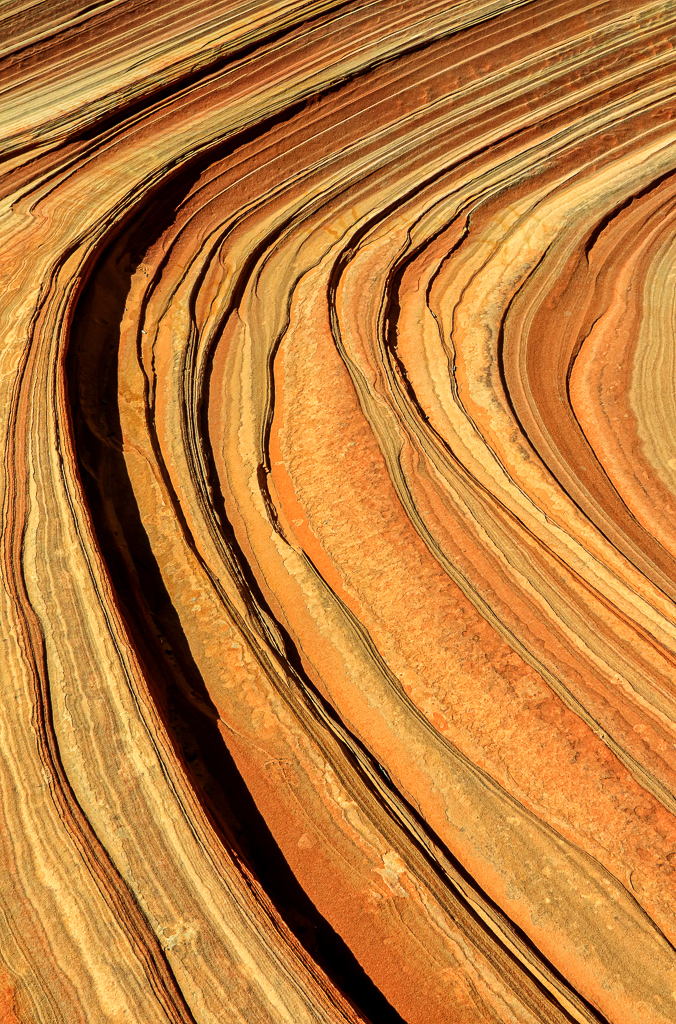
Thank you, Karen. The overall body of petrified sand dune that constitutes "the Wave" is truly fascinating in itself. There are so many pictures within pictures there ----it's just fascinating. |
Feb 9th |
| 2 |
Feb 21 |
Reply |
Piers, My efforts with the image presented was to depict detail of the larger body that is "The Wave". The lines, textures and colors is a picture within a picture. I've got many more images depicting detailed sections of the wave. All are so completley differernt. It was fascinating.
Thanks for your comment. |
Feb 9th |
| 2 |
Feb 21 |
Comment |
Yes, I like it better. Do you?? That's the important question. |
Feb 7th |
| 2 |
Feb 21 |
Comment |
Very pretty image, Karen. The removal of the distracting elements in the lower portion of the image helped greatly. I like the subtle shadows from your lighting that remain on the petals. They help give the image a feeling of depth and separation. I, too, think that the petals on both sides are too close to the edge.
The BW conversion is wonderful. I can picture this hanging on a wall |
Feb 7th |
| 2 |
Feb 21 |
Comment |
Shirley,
I love the title. One can almost imagine a forelorn look in their eyes to add to the title. A descriptive title adds a lot!
I like getting rid of the stump and flipping the image so that the pelicans are looking L--> R. However, I feel that the vignette/darkening seems a bit much for a mid day shot. |
Feb 7th |
| 2 |
Feb 21 |
Comment |
Piers,
One benefit (unintended or not) of the EOS 90D is the 1.6x crop factor to aid in getting closer in birding expeditions. So, your 400 mm lens, racked all the way out, would have given you a 560mm equivalent. When I go birding, I have a 70D with the huilt-in crop factor, and a 60D MKII full frame. I like options.
Your image is wonderful for the interaction between the two birds. I do like the Black&White conversion. The Vignette focuses the eye directly onthe birds. I do feel that the crop has left the one portion of the tree nearest the left birds rear end out of context, as it's no longer tied to the main portion of the downed tree. So, I think a slightly looser crop would have retained the essence of the tree, and given more context. |
Feb 7th |
| 2 |
Feb 21 |
Reply |
Martin, We had 3 people in our group wanting to hike to the Wave during a specific period of time following our hike of the Grand Canyon. It may not be kosher, but all 3 of us submitted entries to the Wave "lottery". One of us won! This was in January 3 years ago. It was an opportuity of a lifetime. The day prior to the hike to the Wave, we were in Page, AZ at Antelope Canyon. More rocks to photograph! I was in heaven.
Thank you for your comments. |
Feb 5th |
| 2 |
Feb 21 |
Reply |
Betty, Thank you for your comments.
You must have been hungry when you first viewed my image. (I'm smiling)
One reason wehy I love the craft of photography is that you learn to see things differently. I love seeing and capturing these types of shapes. I have many images depicting rock "art" similar to this image. |
Feb 5th |
| 2 |
Feb 21 |
Reply |
Thank you for your comments, Shirley. I have a large variety of images that depict rocks in various settings. Many are abstract-looking enough in their natural setting that it's fascinating art form in itself. |
Feb 5th |
| 2 |
Feb 21 |
Comment |
This is an area that I would like to get to and photograph. This image definately tells a story, especially because of the cloud of dust in the mid-distance. I love the varying shades of greens in the closest hills.
Two suggestions that I might offer are: 1) play with the DEHAZE slider in Lightroom in an attempt to bring greater clarity to the distant hills and sky, or, 2) crop out the sky, making for more of a panoramic view of the closer hills and all the colors and shapes. |
Feb 1st |
| 2 |
Feb 21 |
Comment |
All, This is a detailed view - about 2' x 5' section - of the sandstone that comprises the Wave rock formation. The texture, shadows, form and colors is just incredible. To the Geologist, each of these bent layers of rock represent different periods in ancient times where sand particles were lain down, in ancient sand dunes. Then, another type of sand particles was lain down on top of it, compressiong the underlying layers. Ultimately, geologic forces applied enough pressure to create a new rock from old sand from another, older, weathered rock.
It's a fascinating process, and I love documenting the lines, shapes in an artistic realm. |
Feb 1st |
6 comments - 5 replies for Group 2
|
6 comments - 5 replies Total
|