|
| Group |
Round |
C/R |
Comment |
Date |
Image |
| 30 |
Jan 22 |
Comment |
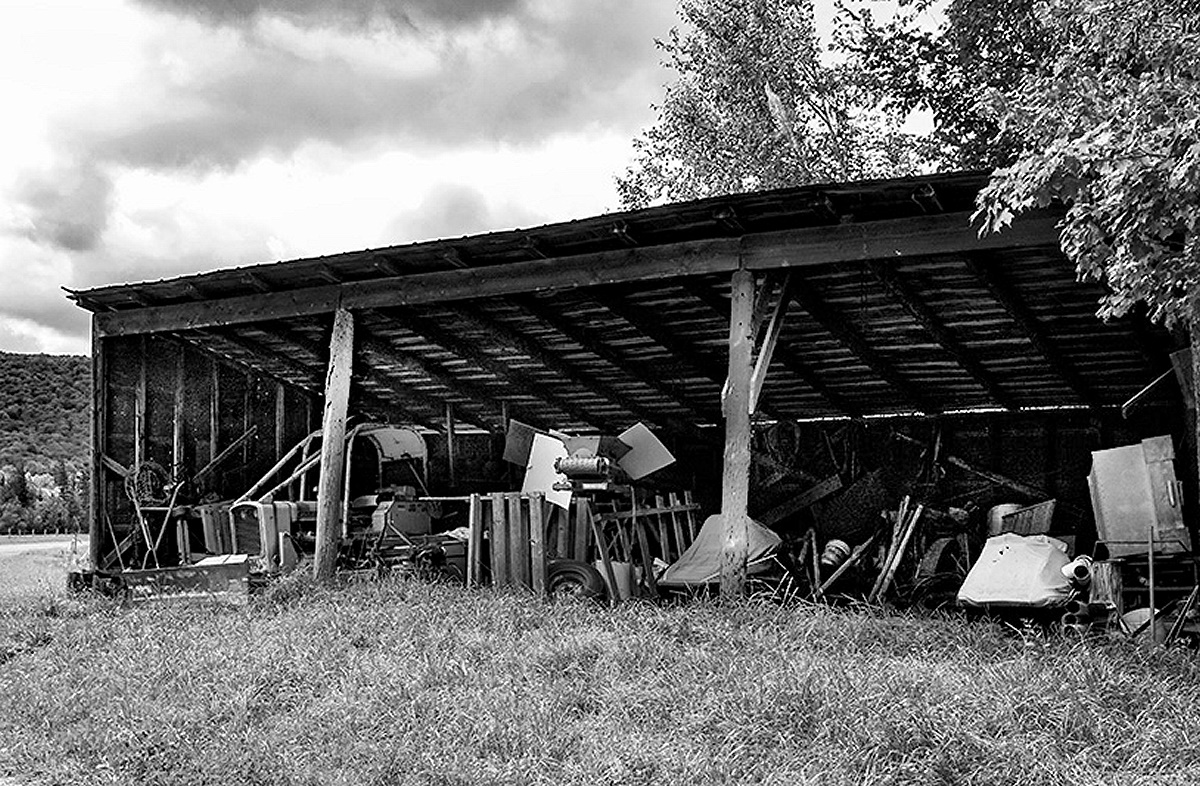
I agree with Jessica that I like the image better if the edge of the road doesn't hit the edge of the image. I also liked it better when I brightened the inside of the shed. Cropping to remove the nearer part of the road entirely felt good to me, as did cropping as Dorinda did on the right. Finally, going to B&W also increased my liking of the image. |
Jan 19th |
 |
| 30 |
Jan 22 |
Comment |
Jessica has nicely summarized my feelings. |
Jan 16th |
| 30 |
Jan 22 |
Comment |
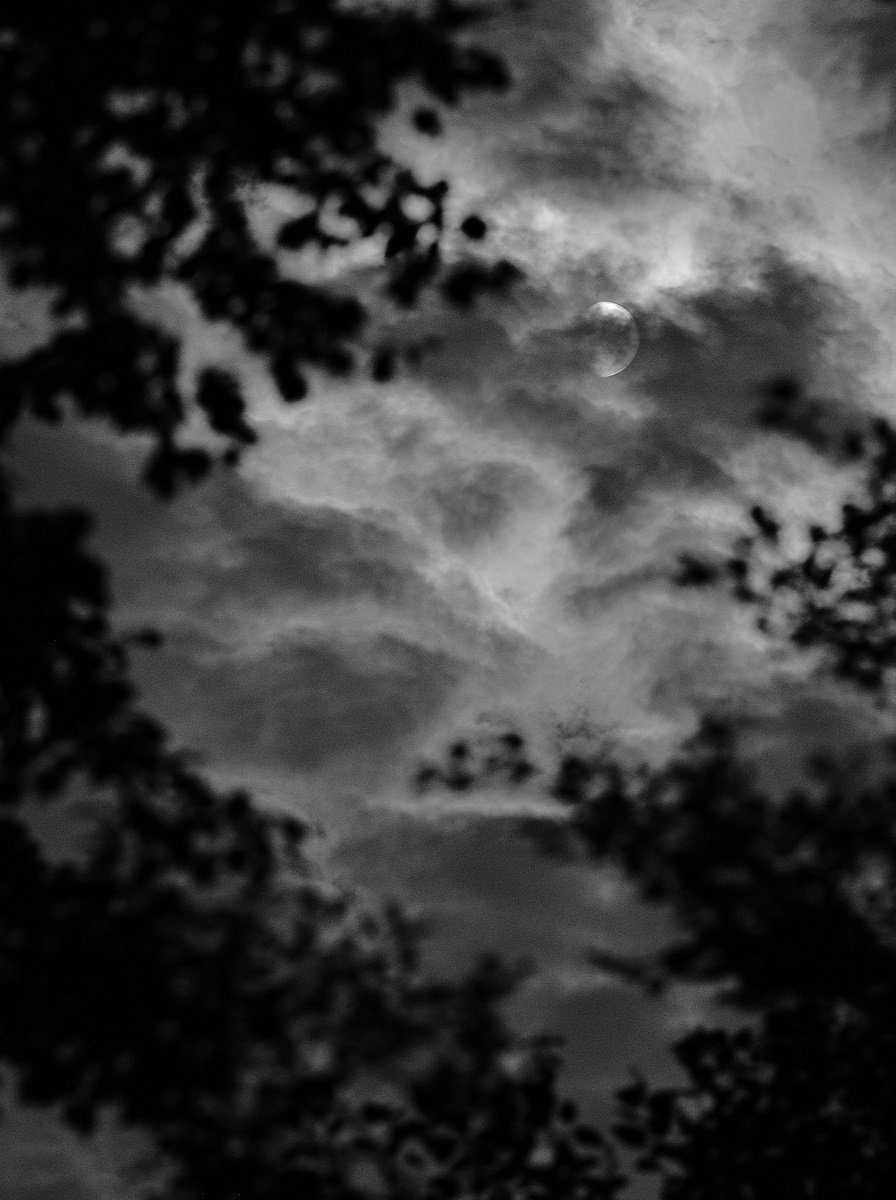
The moon, whose width is half a degree, moves across the sky at a rate of about 360 degrees in 24 hours, thus taking about 2 min to move a distance equal to the width of the moon. If one had a long focal length lens and high resolution sensor, the moon might be 2,000 pixels across. Hence in 1/16 second, the moon would appear to move by one pixel width. Thus any shutter speed shorter than 1/16 second is more than adequate to "freeze" the motion of the moon. With respect to diffraction, for a typical camera, f/8 will generate a Airy disc about one pixel width. However, when viewed on a 10" print at a distance of a foot, the human eye would not see a circle of confusion until the aperture is smaller than about f/24 (See the depth of focus and diffraction calculators at Cambridge in Color.). With respect to exposure, the moon is in full sunlight, and so it is very brightly illuminated. Because the moon constitutes a small fraction of an image, one must however use manual control of the exposure. To have the largest dynamic range, it would be best to use the lowest ISO possible, which usually is 100. With my system, using Live view with a 200 mm focal length lens and magnifying the view by a factor of 10, even touching the cable of a cable release generated noticeable vibrations that took more than 5 seconds to die out. Thus, for the sharpest image one must use a tripod with cable release and a ten second timed release, and with a DSLR, lock the mirror up. Instead of a cable release, if one's camera has an interval timer, you could set it for 10 seconds, start it and let it shoot a three or four images, and just use the last one. |
Jan 13th |
3 comments - 0 replies for Group 30
|
| 42 |
Jan 22 |
Reply |
Thank you for the help and encouragement. I can try this yet again when the snow has melted. |
Jan 23rd |
| 42 |
Jan 22 |
Comment |
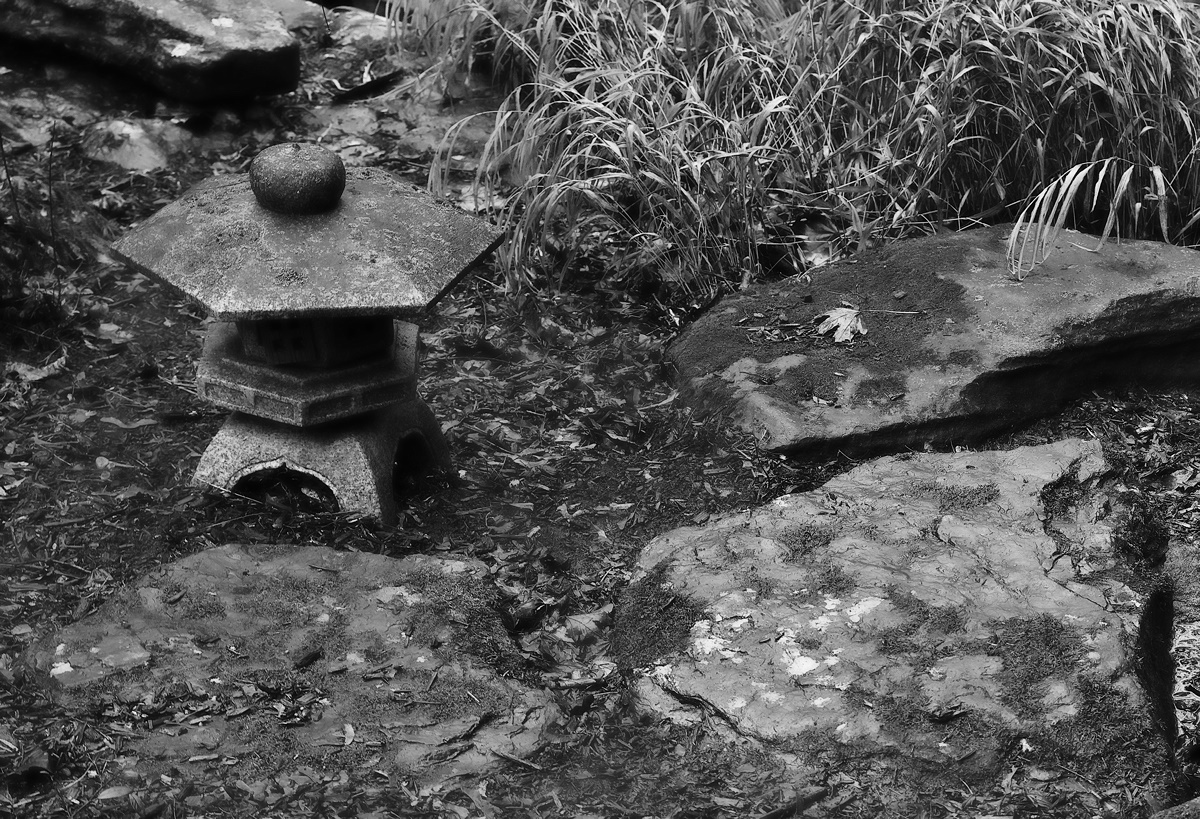
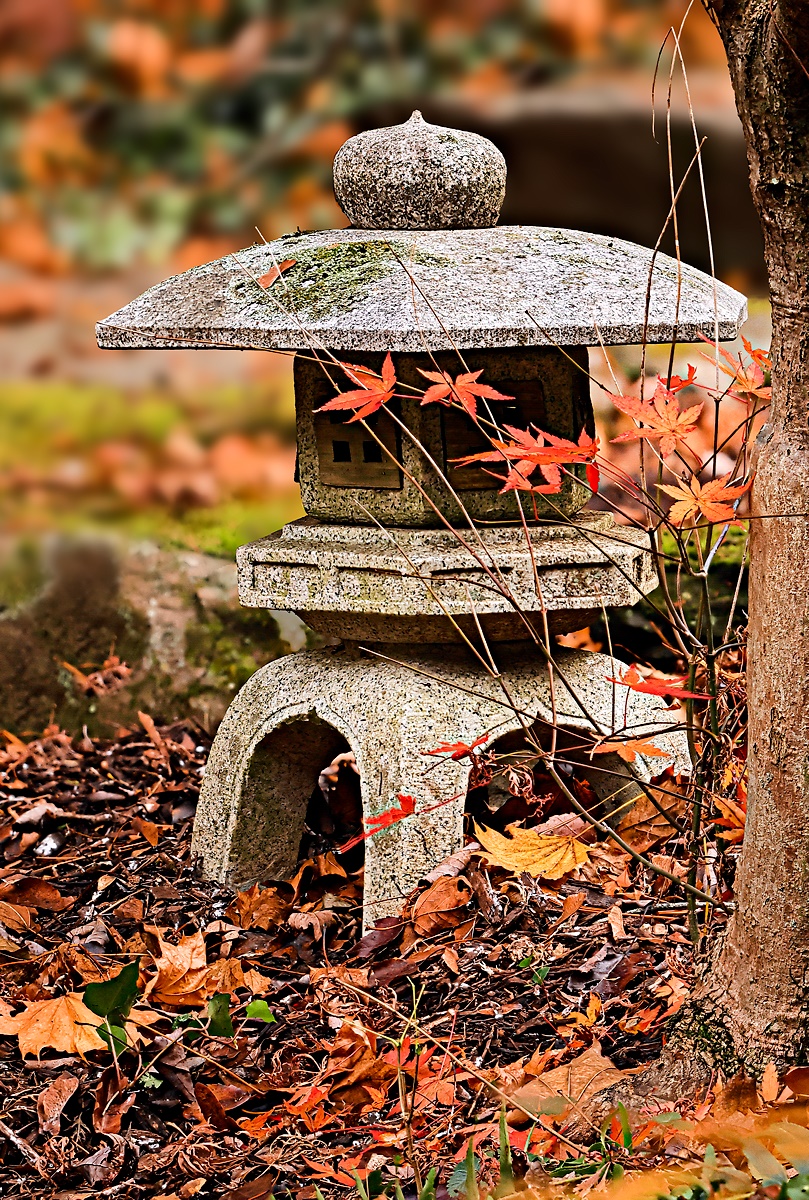
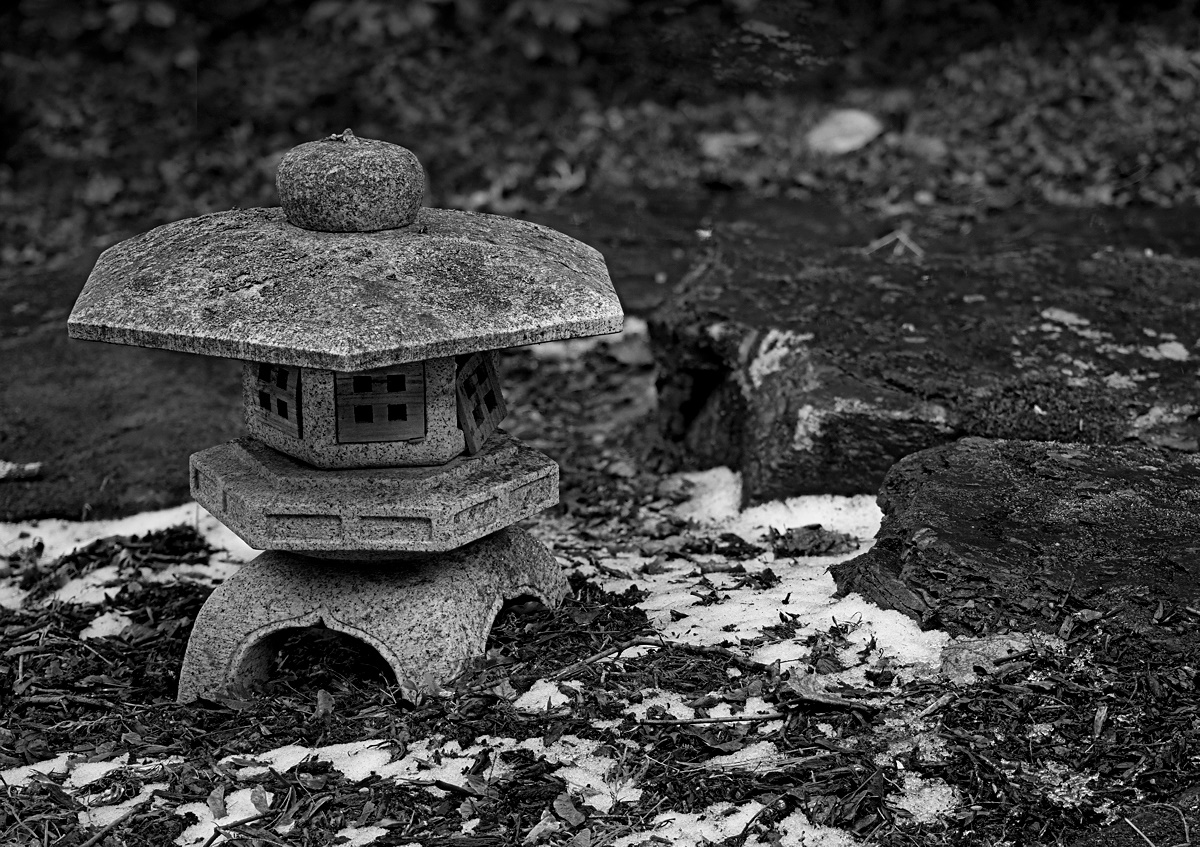
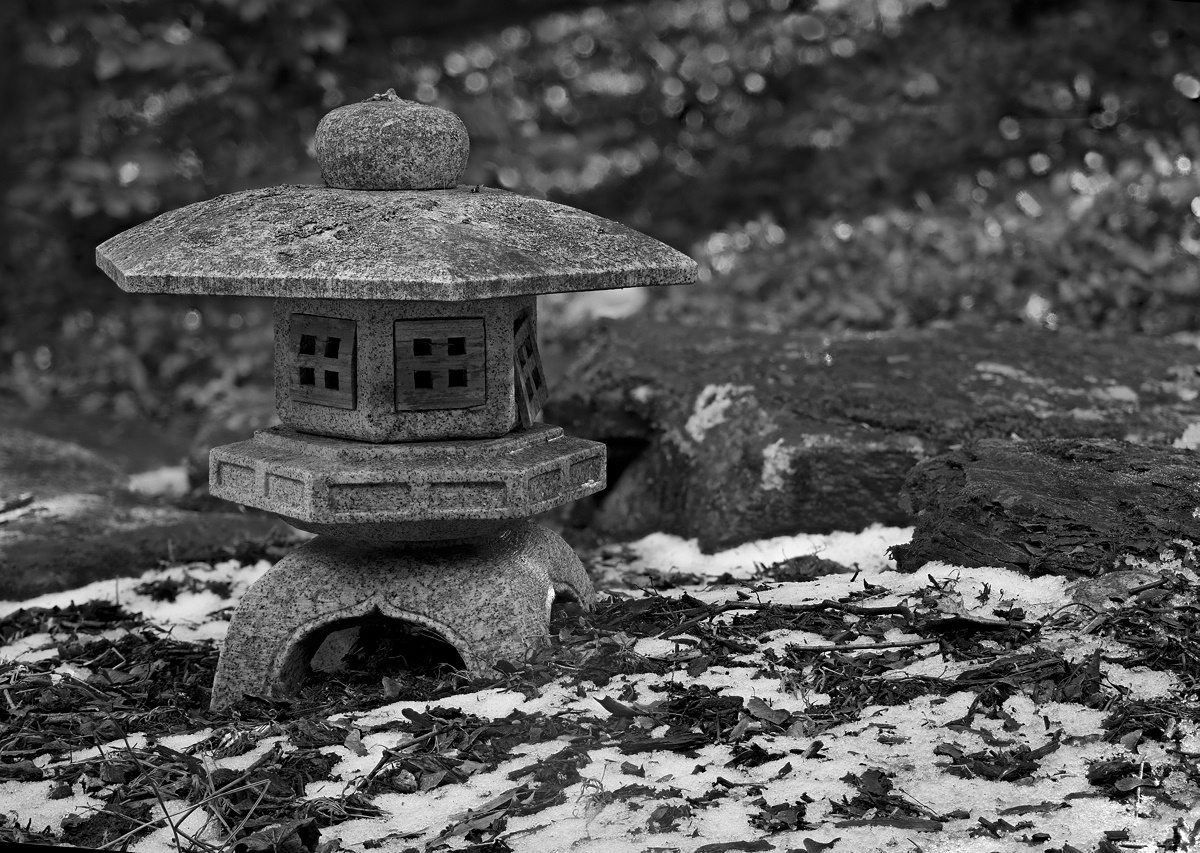
After posting the previous image, I felt that the stones were too inconspicuous so I reshot. In the meantime, the temperature dropped and my hose for watering the stones was frozen. Therefore, I carried water in two buckets to wet and darken the stones. I shot this one from a higher camera angle, but one still low enough to expose the detail under the "hat". This was focus stacked and used images that were in focus from the very front of the image to the far edge of the lantern. As I used as wide an aperture as possible, f/4, the background seems adequately blurred. |
Jan 19th |
 |
| 42 |
Jan 22 |
Comment |
I don't care to crop much closer and make the lantern the sole subject of the image because I don't think one should photograph paintings and sculptures unless the photo adds something beyond the original artwork. For me, the lantern is equivalent to a sculpture, and therefore I want to show it in context, and for me, the stones seem to add the feeling of a Japanese stone garden. Included here is a shot for Dorinda from an angle that excludes the grasses. Maybe I should cut down the dead grasses and reshoot number three. |
Jan 18th |
 |
| 42 |
Jan 22 |
Reply |
Here it is with wet rocks and a slightly different background. Before shooting I encouraged the stalks of grass to use better posture and stand up straighter. |
Jan 14th |
 |
| 42 |
Jan 22 |
Reply |
I also like this one better. I may try hosing the rocks and shooting again.
Thank you for taking the time. This is the sort of discussion that I am seeking. |
Jan 13th |
| 42 |
Jan 22 |
Reply |
The snow did flatten the grass, degrading the view of the lantern. I've tried a number of other angles, and this is the least poor of the lot. To me this would look better if the stones had been wet as they were in the previous image. Because I didn't want to lie on the ground, I used my tripod set as low as it would go. Because the camera was on the tripod, I could use focus stacking to have the entire lantern in focus. Even with my lens wide open (f/4), the background was too distracting so I blurred that in post. |
Jan 12th |
 |
| 42 |
Jan 22 |
Reply |
Thank you. Your suggestion of getting "down and dirty" so as to deemphasize the rocks and emphasize the grasses sounds hopeful. I'll give it a try. Check back in a few days. I'm hoping that an intervening snow storm has not flattened the grasses. |
Jan 10th |
| 42 |
Jan 22 |
Comment |
Yes, I, too, like what Keith did. Your detailed description of the processing didn't include the exposure information. Does your camera have image stabilization, and what was the ISO of this shot.
Looking at this, I can't help wondering how it would look had it not been taken head on. |
Jan 9th |
| 42 |
Jan 22 |
Comment |
I agree that the image is tipped, but when I tried to correct it, I found that the tip was a lot less than I first thought. The perspective seems to create the illusion of tip. I found that I liked the image more after cropping from the left and top. At least as the image came through to my system, there were some pixels very close to total black. The brightest pixels were reasonably far from pure white. Usually I like a B&W image to go from pure black to pure white. When I increased the brightness however, the nice feeling of fog and mist disappeared. Instead, using an S-shaped luminosity curve increased contrast in the hut, particularly the corrugations in the roof. I also liked the image more after reducing its greenish cast. Finally, there is some interesting detail in the structure of the hut that can be brought out by selective lightening. |
Jan 9th |
| 42 |
Jan 22 |
Comment |
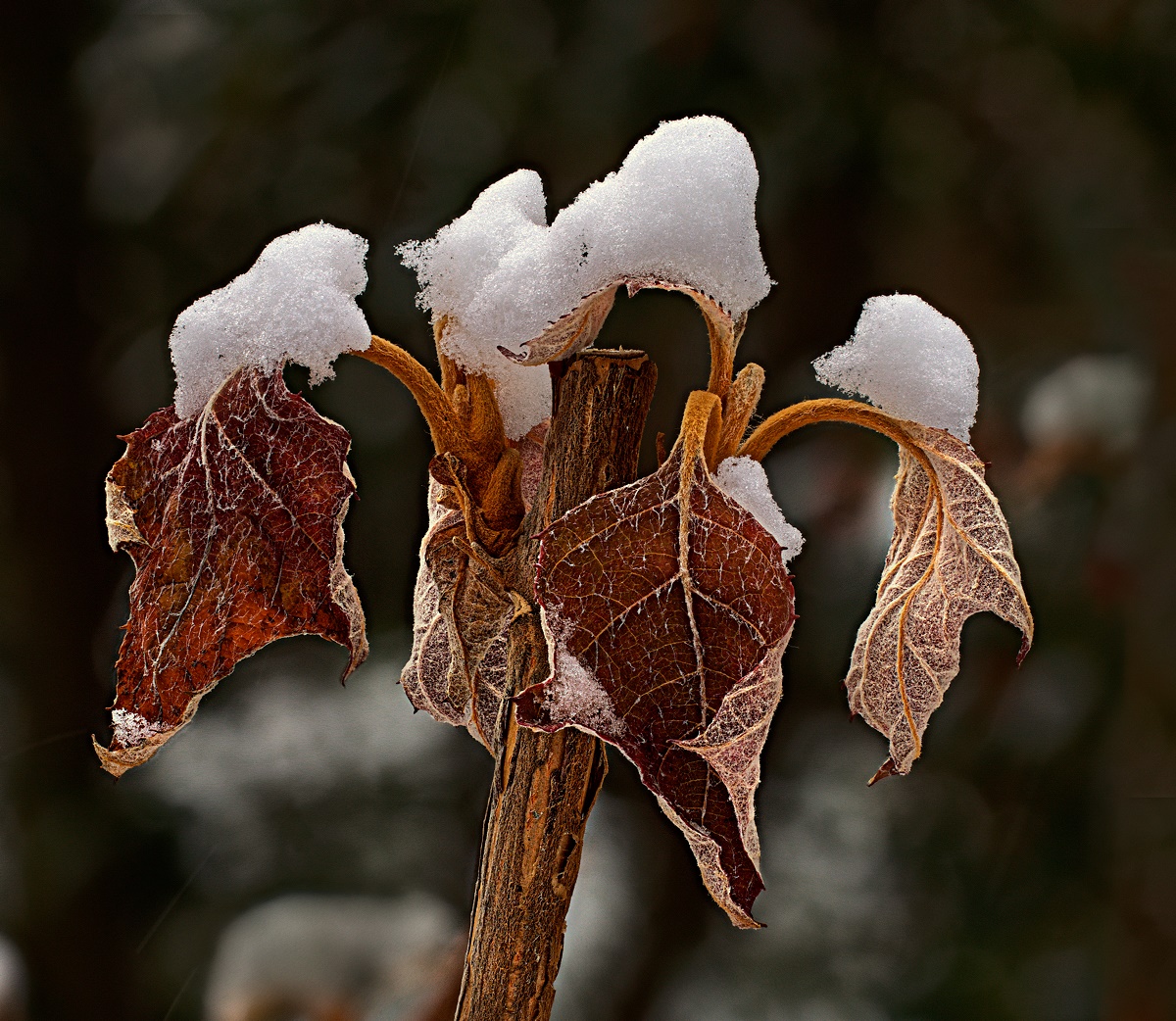
I love winter scenes, and snow having been driven sideways makes them even more interesting. For the title "No Visitors Today", to me, the image would be improved if it were shot from closer to the feeder so that it could comprise a greater fraction of the image. The image has another element that I think could also form the basis of a compelling image. This is either of the oak trees with the partially snow-covered brown leaves. |
Jan 9th |
| 42 |
Jan 22 |
Comment |
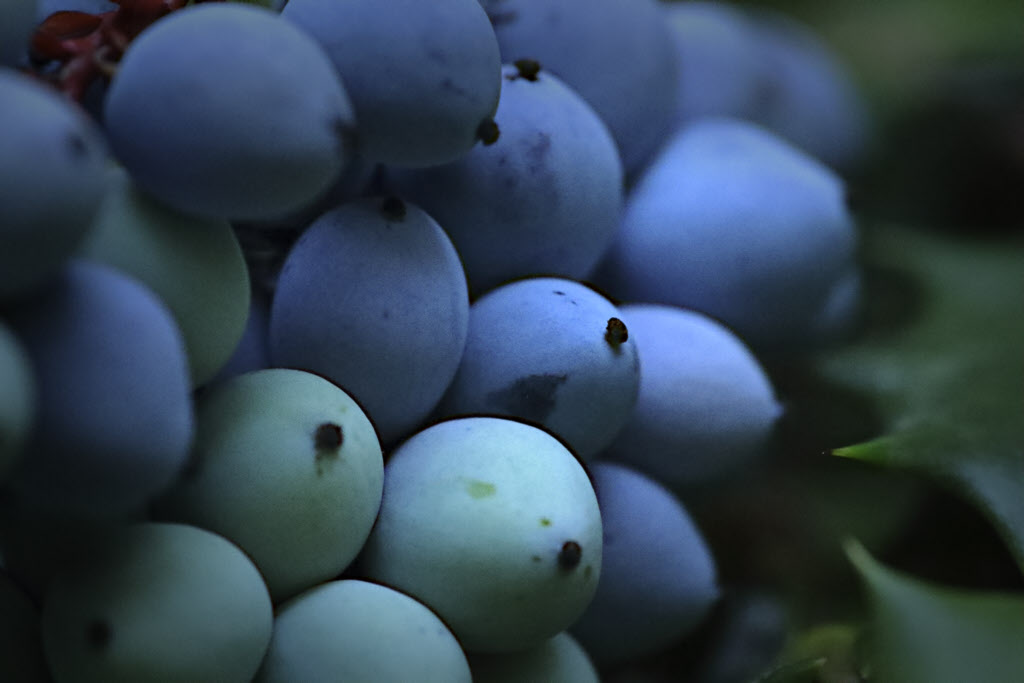
I think it is beautiful as well. I'd like it still more if the above-ground fruits were not "contaminated" by the below-ground vegetable. |
Jan 9th |
| 42 |
Jan 22 |
Comment |
My eye and brain process the elements of this image in the following order: bright red wall, cluster of three women, faces of intense concentration, native dress, small electronic device. The face masks didn't register until I read Keith's comments.
To me, the most interesting and important aspect of the image is the intense interest of these three indigenous(?) women wearing native dress on the electronic device that one is holding. To focus on this and reduce the other distractions, I significantly cropped. (Not that I don't like the red wall, but I find it fighting with the faces.) |
Jan 8th |
 |
| 42 |
Jan 22 |
Comment |
I like the colors of the vegetation against the sky and this unusual angle for photographing a waterfall. I liked this more after I removed the excessive distortion that is caused by the camera's 16 mm lens pointing so sharply upward. In particular I find it distressing that the trees on on either side point so sharply towards the center. Here I've removed some of this distortion, which, for me, results in a more natural and comfortable feeling. |
Jan 6th |
 |
8 comments - 5 replies for Group 42
|
11 comments - 5 replies Total
|