|
| Group |
Round |
C/R |
Comment |
Date |
Image |
| 67 |
Aug 19 |
Reply |
Are you talking about the Topaz Denoise program? I haven't used it, but it has gotten good reviews. Thanks for the lead - I'll look into this more. |
Aug 27th |
| 67 |
Aug 19 |
Comment |
Richard, this hummingbird shot is incredible and I admire your panache in getting it! As one who has backyard bird feeders, I know it's not easy to get the right bird making the right moves with the right lighting and background. And this is all the more difficult with hummingbirds. I made note that 1/2000 shutter speed wasn't enough to still the wing-tips. Congratulations on getting a great image and I agree with Larry - you can take this shot on the road. |
Aug 27th |
| 67 |
Aug 19 |
Reply |
As a fellow Yellowstone admirer, I appreciate your comments! You're right about the long learning-curve. It seems like every time I go out for a shoot, I come back and marvel about how much I still have to learn. Oh well, photography is a journey in many dimensions! |
Aug 27th |
| 67 |
Aug 19 |
Reply |
Thanks, Todd. All national parks are beautiful, but Yellowstone is special for its active volcanic scenery. For sure, get there! |
Aug 27th |
| 67 |
Aug 19 |
Reply |
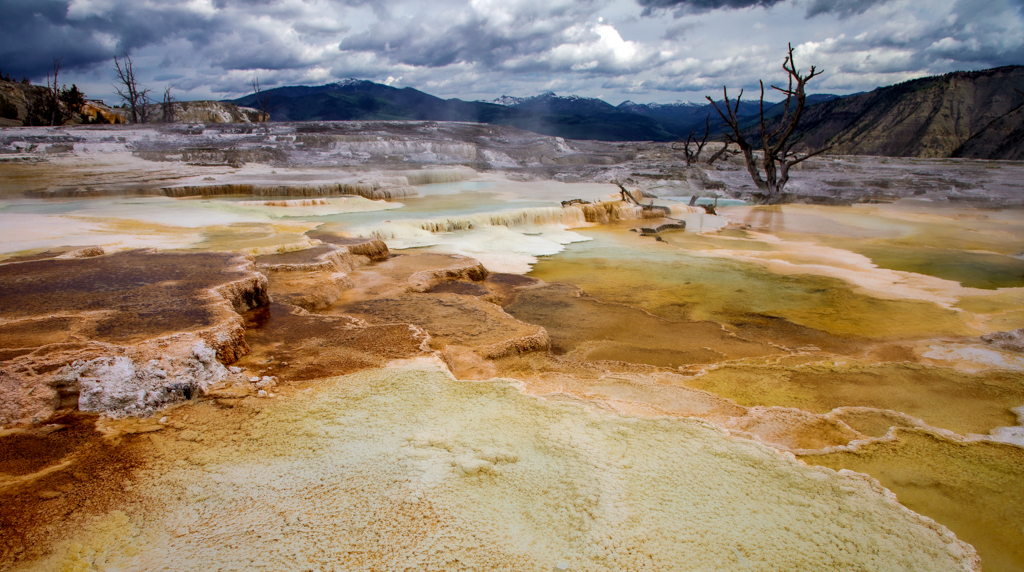
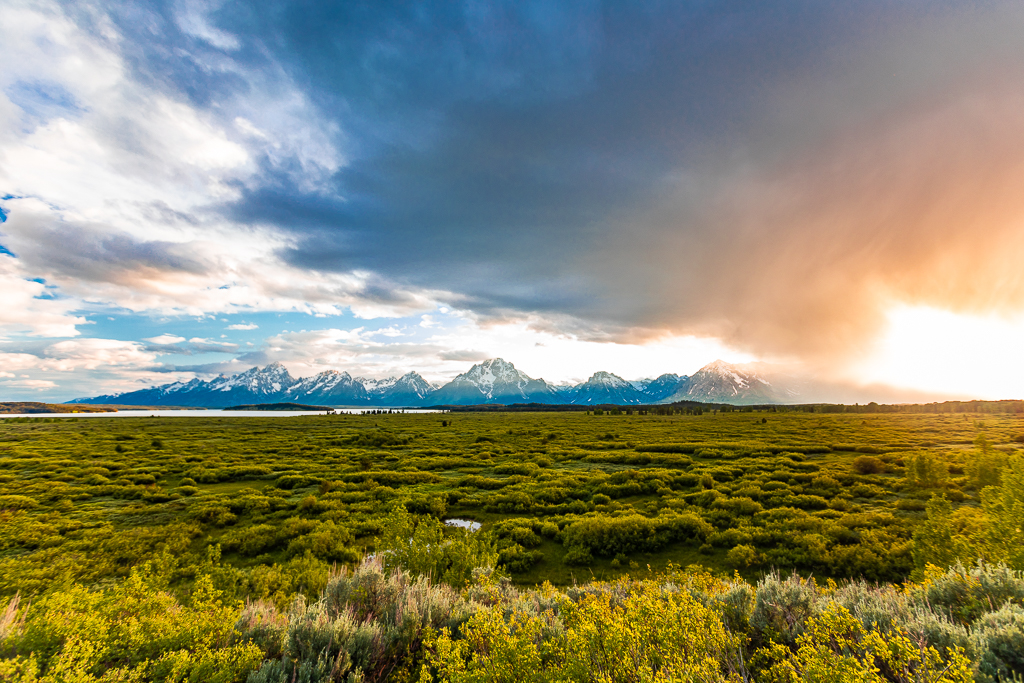
Thanks, Madhusudhan. I agree with your comments. As I noted earlier, I am still training my eye to see not with three-dimensional human vision but with two-dimensional camera vision. My human eye was taken by the broad greenish pool in the FG, and I intentionally set the horizon line high to get more FG. But the short-lens magnified the FG disproportionally in the two-dimensional image. The lesson for me, when doing hiking snapshots, is take multiple frames from different angles. The other lesson is check the LCD display to see how the care has rendered the image. |
Aug 27th |
| 67 |
Aug 19 |
Comment |
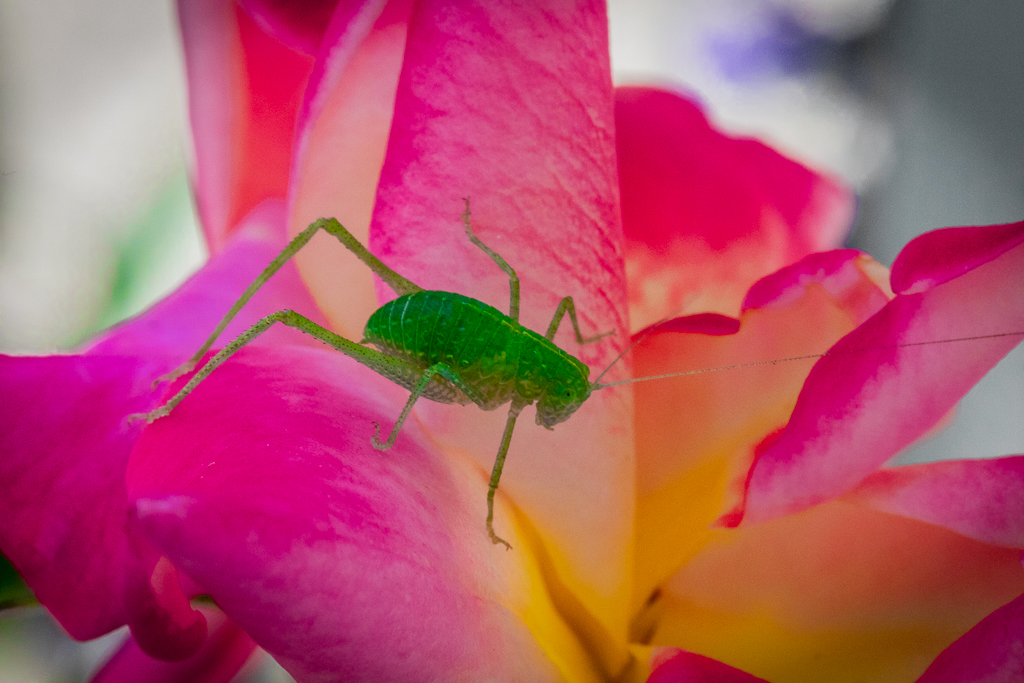
Todd, you took a nice image and I agree with the kudos mentioned by the others. The in-focus details on the bee and flowers below the bee are excellent, and the color scheme hangs together well. I too dabble in macro, using a Canon macro 100 mm EF lens (1:2.8L). When I set out to shoot flowers and/or insects, I mount my macro lens. When out and about taking random, opportunistic shots, I've had fun taking close-ups using the telephoto on my Sony RX10 IV that zooms to 600mm equiv. As you know, the telephoto really creates a short DOF and the background can be incredibly compressed.
My wife keeps a bee & butterfly garden, so you've inspired me to get back out there again since the garden is in full bloom in August. |
Aug 14th |
| 67 |
Aug 19 |
Comment |
Madhusudhan, it looks like you are channeling Larry with this wispy waterfall scene. You did a nice job capturing the scene and following-up with post-processing. You have a wide dynamic range in this image (bright sky and dark shadow in the trees). I agree with others in the group that cropping the troublesome areas helps the composition and the extreme highlights and shadows (as Larry has done in his version). It's always tough to avoid visitors who loom large in the foreground. You were smart to return in the morning. Your resulting image was worth the effort! |
Aug 14th |
| 67 |
Aug 19 |
Comment |
Larry - it's an understatement to say that you created an incredibly wonderful image. I appreciate your detail on you method of searching for the right components for your composition. It is incredible the number of filters that you add to make that image pop.
I'm also impressed by how you study each shot taken, real time, and decide whether that image is "it" or another is needed. I'm curious whether you use the LCD display on the back of the camera - or is your camera connected to laptop that shows the image in a larger format? Considering that you are wading and crouching in pools of water, I would guess you rely on the LCD to assess a new image. If so, I marvel at your being able to see the LCD well enough. In brighter scenes, I find the use of the LCD for image evaluation to be a challenge.
Needless to say, it's a pleasure to see your creations and even better to learn about how you got there. |
Aug 14th |
| 67 |
Aug 19 |
Reply |
Thanks for your comments, Richard. I'm always amazed at the how the RAW file yields an image with colors that yo didn't think were there. And as I noted in my response to Larry's comments, it is a challenge to match the scene to what the eye sees (and remembers) to what the software can do. But to me, post-processing is part of the fun. |
Aug 12th |
| 67 |
Aug 19 |
Reply |
Thanks, Michael! |
Aug 12th |
| 67 |
Aug 19 |
Reply |
Larry - As always, thanks for your detailed and technical comments. As Todd noted, hyperfocal landscapes are a challenge, and lens optics add to the challenge.
What I am learning from these monthly critiques is that what my eye sees and what the camera captures are two different things - 3d vs. 2d (duh). When I came upon the scene, I was taken with the large mineral pool in the FG, as well as the coloring in the other pools at the mid-focal point. I wanted to capture that larger pool in contrast to the other more distant pools. In other words, I wanted to ground the image with the dramatic greenish pool in the FG. However, in post-processing, when I saw the 2d image and the exaggerated FG due to the wide angle frame, I could see that I had not visualized the scene the way the camera does. The FG pool over-dominated the frame. So, I cropped it down and I agree that it could have been cropped more.
In retrospect on this trip to Yellowstone, I relied too heavily on the wide angle shots that creates the effect of the FG being enlarged and the BG being minimized. This approach does have value for certain shot, but I realize that I over-did it. This "lesson" taught me the value of a longer lens for landscapes when I can get enough distance between me and the scene to make the longer lens useful. And to Larry's point, whether wide-angle or telephoto, a tripod can solve a lot of problems! |
Aug 12th |
| 67 |
Aug 19 |
Comment |
Michael, I will join the chorus to say your image is amazingly amazing! It's really stunning at first glance. I thought about the value-added of a polarizing lens. You would have gotten more of the lake's bottom, but maybe you would have lost some of the reflection?
Your post-processing is excellent and the colors are well balanced. While Richard suggested showing a bit of the shoreline as a bottom-frame, I liked the "floating" symmetry of the image that you have created. I don't wear socks much, but you sure knocked-off my flip-flops! :) |
Aug 11th |
| 67 |
Aug 19 |
Comment |
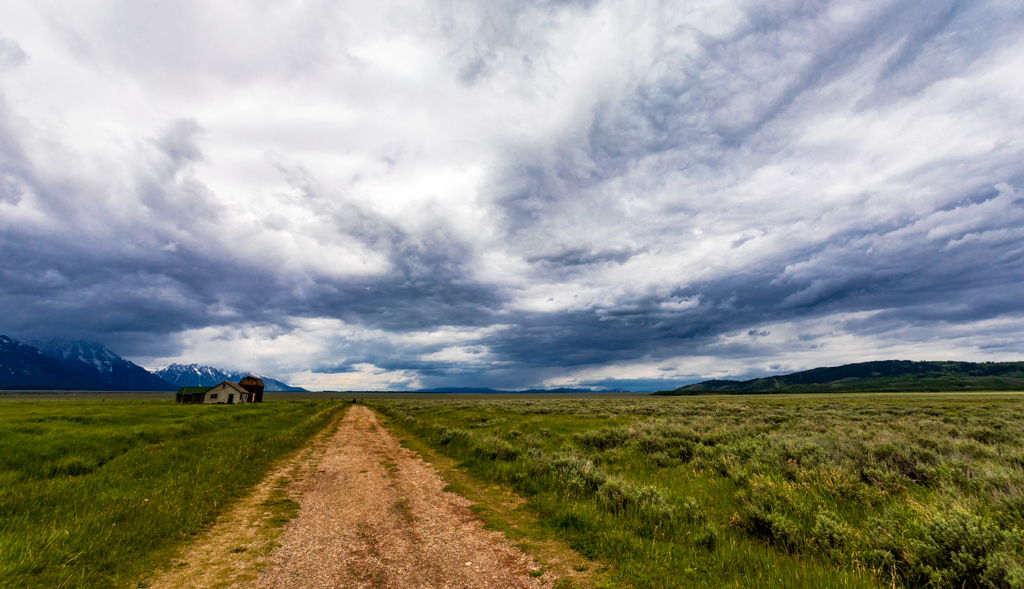
Cheryl, this is a really nice image - and it makes me want to go back to Yellowstone! It's interesting that your aperture setting (f9) is the same that I used for my landscape submission.
I agree with Larry's comment on both your photo and mine that this aperture setting didn't create the hyperfocal image that we both wanted. And in response to Larry's comment about pine tree that frames the right, I always find it a challenge about the amount of a tree to use as a horizontal frame. I found that your cropping of the tree looked good to my eye. Larry thought more of the tree should have anchored the frame. For shots like these, I always struggle with those tough judgment calls about how much "presence" of a tree (or boulder or bush) constitutes a good side-frame.
All in all, your image of the morning light on the mineral pond juxtaposes forest decay with new forest growth, which nicely captures the cycle of life in Yellowstone. |
Aug 11th |
6 comments - 7 replies for Group 67
|
6 comments - 7 replies Total
|