|
| Group |
Round |
C/R |
Comment |
Date |
Image |
| 32 |
Oct 23 |
Comment |
Always impressed by those who shoot this genre. I've never been able to really handle the photojournalism angle.
Hats off to you. |
Oct 9th |
1 comment - 0 replies for Group 32
|
| 33 |
Oct 23 |
Comment |
Life in a tropical lagoon setting. Quite lovely.
Just a note: TYhe eye of the viewer is always drawn to the brightest part of the image and in this case it is the sky. This draws attention away from your boat the water. You could easily add a gradient to the sky to darken or even crop it out. Either would force attantion where it belongs on the lover part of the image. |
Oct 28th |
| 33 |
Oct 23 |
Comment |
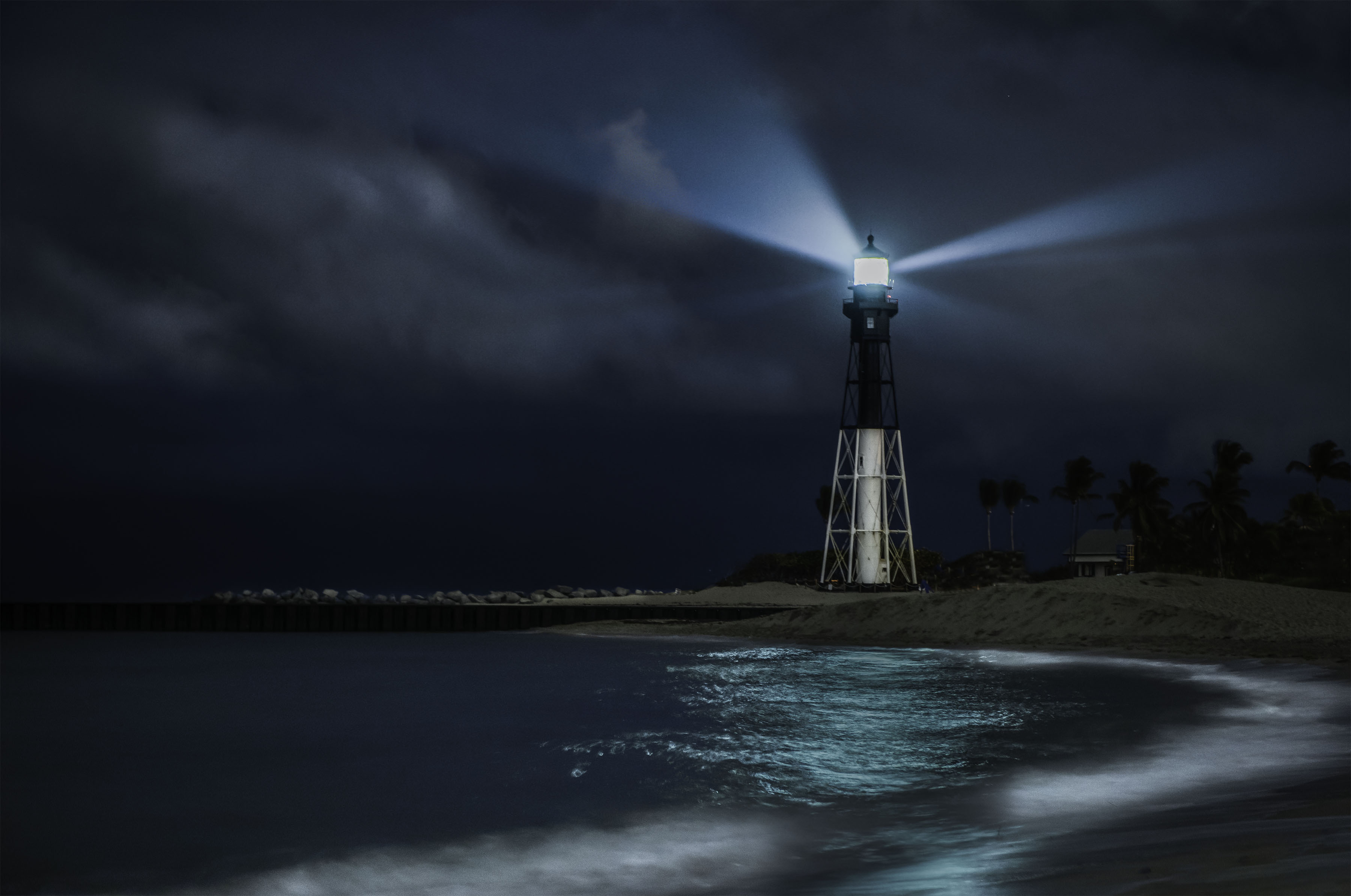
Such a hauntingly moody image. The cool blues against the stark white are a visual treat. This feels like a perfect moment during the blue hour. When the air is clear the blues can be so intense. This is it.
Maybe ever so slightly open the shadows on the dark tower. |
Oct 28th |
| 33 |
Oct 23 |
Comment |
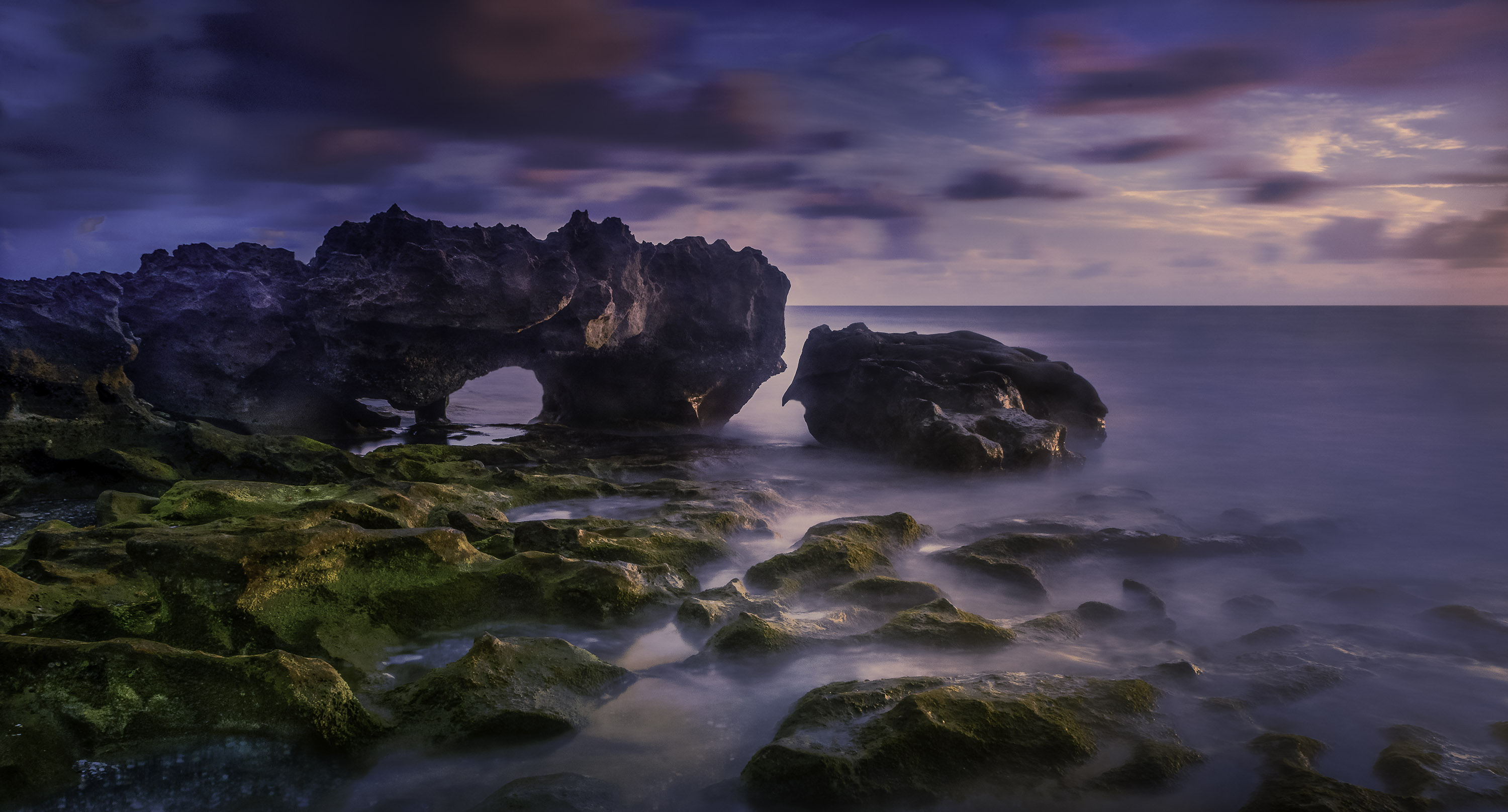
Quite minimalistic, but most effective. A lovely visual experience. |
Oct 28th |
3 comments - 0 replies for Group 33
|
| 36 |
Oct 23 |
Comment |
Thanks so much for stopping by to comment. I do appreciate it. |
Oct 28th |
| 36 |
Oct 23 |
Reply |
Thank you. The light was just perfect, such a rare thing. It was worth the mile walk in the light rain.
|
Oct 28th |
| 36 |
Oct 23 |
Reply |
Thanks for making me feel better. Apparently no one else noticed either. |
Oct 28th |
| 36 |
Oct 23 |
Reply |
Been a hectic month so I'm sow getting back. I like your suggestions about darkening the blurred trees. I just have one question. Where were you years ago when I needed that suggestion? :-) |
Oct 28th |
| 36 |
Oct 23 |
Reply |
IMPORTANT CAMERA HACK TO HELP SAVE FOCUS
I do a lot of late night photography in a lot of very awkward locations. One problem that used to cause me headaches was focusing on infinity when in very dark places. Sometimes it was impossible to reach the destination when there was still daylight so how was I to focus? I know there are lots of techniques about how to focus on the stars at night but I've never had great luck with some of them. This one is fool prof, and I'm a really big fool.
So here is the trick: While still in the parking lot, or even at the hotel I simply take the camera outside while there is still light and and focus on anything that is far away, a tree, a building, whatever. The I take a 1-2 inch piece of electrical black tape from a roll in my camera bag and place the tape lenghwise on the lens barrel so that it is half covering the focus ring and half on a none moving part of the lens barrel. I also turn off the auto focus switch on the lens. I can now place the camera and lens back in my camera bag and hike as far as I want then when I reach the location I take the camera out set on on the tripod and it is already focused and ready to go. This has never failed me.
I will also use this tape technique even if I arrived early at the location focus and then have to wait several hours for the stars to appear. I just stick the tape on the lens so that I won't lose focus if I by accident touch the camera in the dark. I regularly store a piece of tape on the lens shade so I always have one handy. I teach this technique at all my Milky Way workshops.
Hope this helps. |
Oct 28th |
| 36 |
Oct 23 |
Comment |
Wel, I'm glad you managed to get the forge god of the forge to accommodate you with a bit of fire and smoke to make his presence known. It is only fair that if he has to sweat then you might as well do some sweating as well.
I'm glad to learn that seeing these sites is no easier not than when I visited (and got lost) many years ago.Your setting and processing seems to be pretty accurate, although I feel the two tall trees look a bit soft. maybe reduce the shutter speed (the building is not going to move) and increase the DOF. But this would depend on exactly where you placed the focus point.
|
Oct 11th |
| 36 |
Oct 23 |
Comment |
What a mean person you are! Your meteor shot the black horse nebulae right in the heart! :-) However if this is your first capture of the Milky Way all is forgiven. Personally I always get a thrill out of seeing the Black Horse in my photos.
You managed a fine capture and did a nice job is photographing the stars and keeping them as pin points. With the Milky Way it is always important to capture a solid foreground and your mountains work quite well. I like that you kept the MW low and sort of in the "bowel" of the mountains. That placement make a lot of difference in the final composition. I usually shoot my MW images at around 24mm focal length but yours looks quite nice at 35mm.
How you process the Milky Way is a personal choice, as you note it can be done in many different styles. Don't think I've ever seen it in purple and brings out a different dimension down like this.
You might try running the foreground through a denoise program as to my eye the mountains seem to contain a bit of noise.
I'd be interested as to how your instructor taught you to focus for this shot I have my own method but I do not know of too many others that use it.
|
Oct 11th |
| 36 |
Oct 23 |
Reply |
Thanks Stephen. You will be happy to know that NO large animals were involved in this experience. :-) |
Oct 9th |
| 36 |
Oct 23 |
Comment |
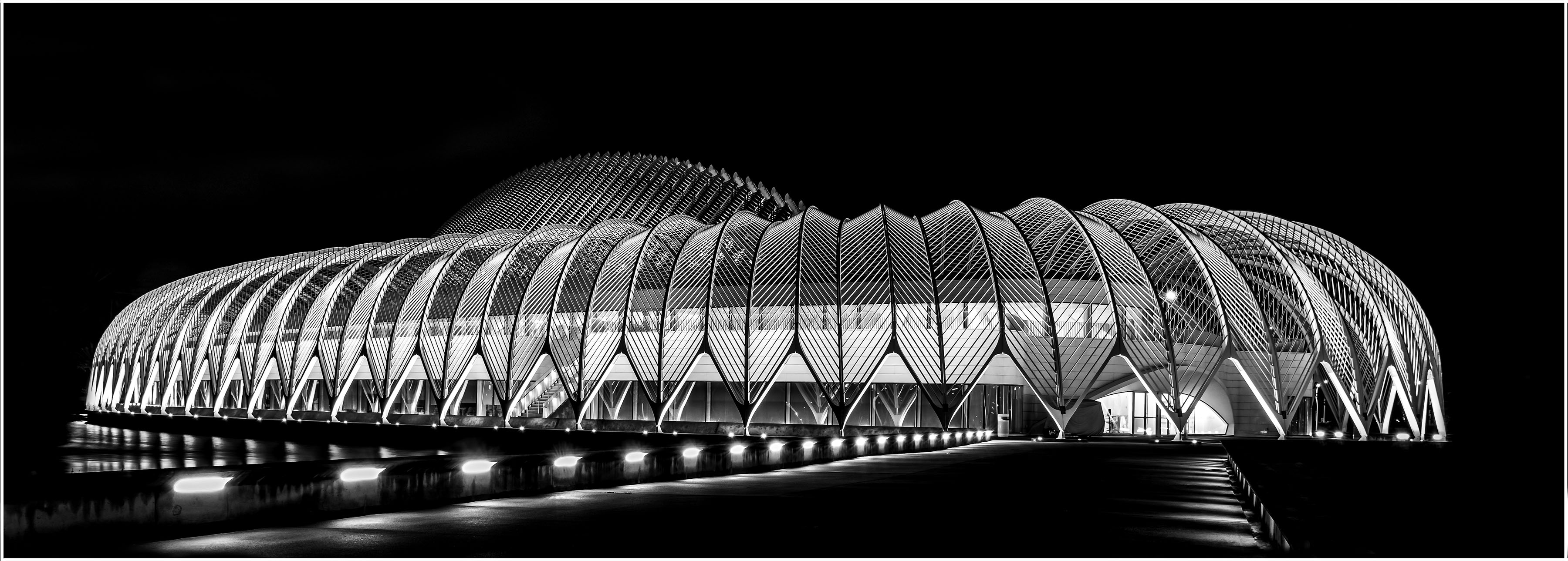
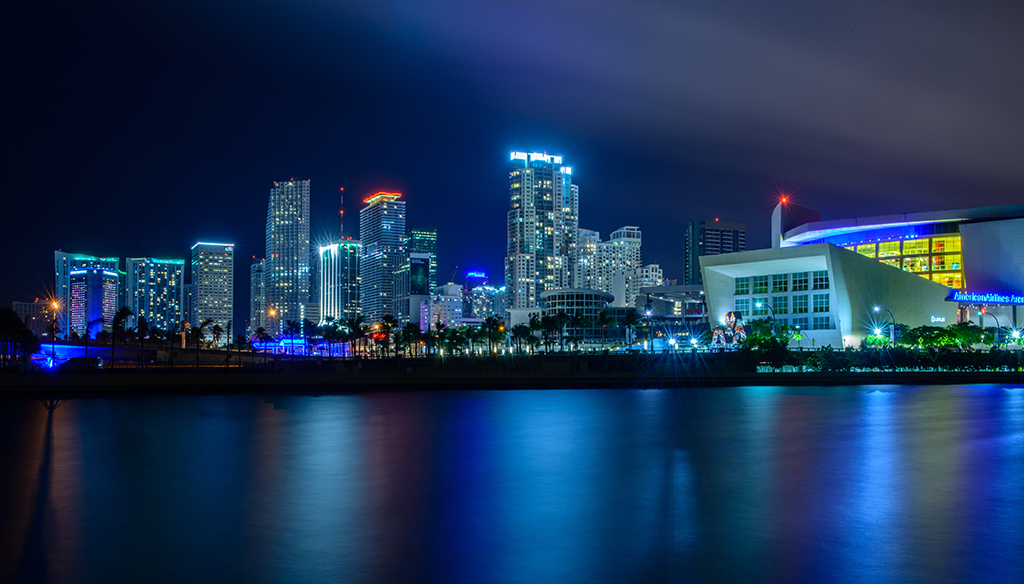
I always enjoy your conversions as they seem so natural. This image certainly makes use of repetitive shapes to retain viewer interest. The natural starkness of monochrome is nicely blended with the crisp exceptional sharpness of the image. Your compositional position make the city feel quite large as it fades into infinity on both sides. The reflection really adds to the visual balance.
As usual, nicely done. |
Oct 9th |
| 36 |
Oct 23 |
Comment |
Even with the use of powerful red/green color combination you have made this image feel calming and serene. The colors are soft and the treatment of the long grasses add to this soft feeling. This image has great depth and the flowing lines of the rolling hills makes the image flow quite naturally into the distance. I think the shape of the barn enhances the flow. The color of the barn roof help to tie the distant hills and the sky together to make a more cohesive total image. |
Oct 9th |
| 36 |
Oct 23 |
Comment |
Photography is rapidly becoming a fine art form. The days of just walking out side, pointing a camera and activating the shutter are long gone. This may be especially true for those who enjoy night photography. Camera can now reproduce what our eyes can hardly see and it is up to the photographer to bring these visions to life. No camera can match the dynamic range of the human eye. Your careful explanation as to how you created this masterpiece clearly shows not only your camera skills but your editing skills as well.
I feel you found perfect foreground to compliment your sky. The diagonal fence line really adds to the sense of the infinite that is picked up by the depth of the sky with the distant stars and the approaching meteors. The vertical format was the perfect choice. You have put the viewer right there on the fence line and visually just told them to look up making them see your vision.
Personally I just wish this was just a tad bit brighter. But this is a maker's choice. |
Oct 9th |
6 comments - 5 replies for Group 36
|
| 67 |
Oct 23 |
Comment |
USING AI AS AN EDITING TOOL IN REAL WORLD PHOTOGRAPHY SITUATIONS.
We have all heard how AI is taking over photography and how it can generate a photo from nearly nothing. I am well aware that photography is changing and that many current photographers will fully embrace the world of AI. I have been part of Adobe's test team for the Beta version of Photoshop. A couple of weeks ago Adobe released Photoshop 2024 a version that has fully included Image Generation, Adobe's name for AI.
I have been testing how AI can be used in what has been called Real World use of AI. For example. For years we have edited photos using the clone tool and even cutting and pasting to remove such things as a person, a trash can, even offending tree branches and a host of other things. AI can do these things for us much faster and sometimes better than we could with the old tools. One of the things I have been historically plagued by is overexposed areas of sky that bleed through trees when we shoot back lit subjects. Since as wild life photographers we often end up shooting subjects that live in shade and have this back light problem show up in our images I have spent many hours trying to "fix" the problem.
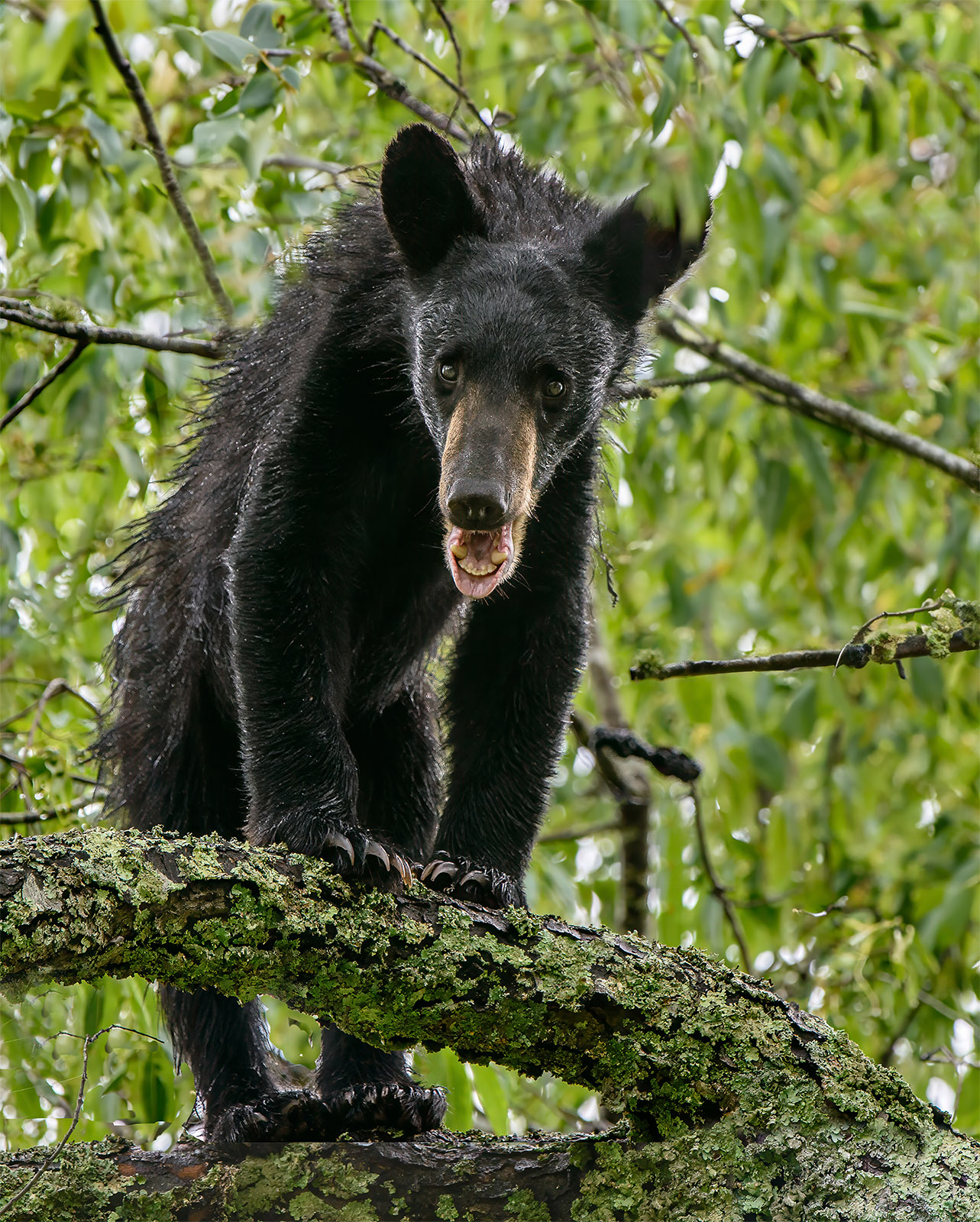
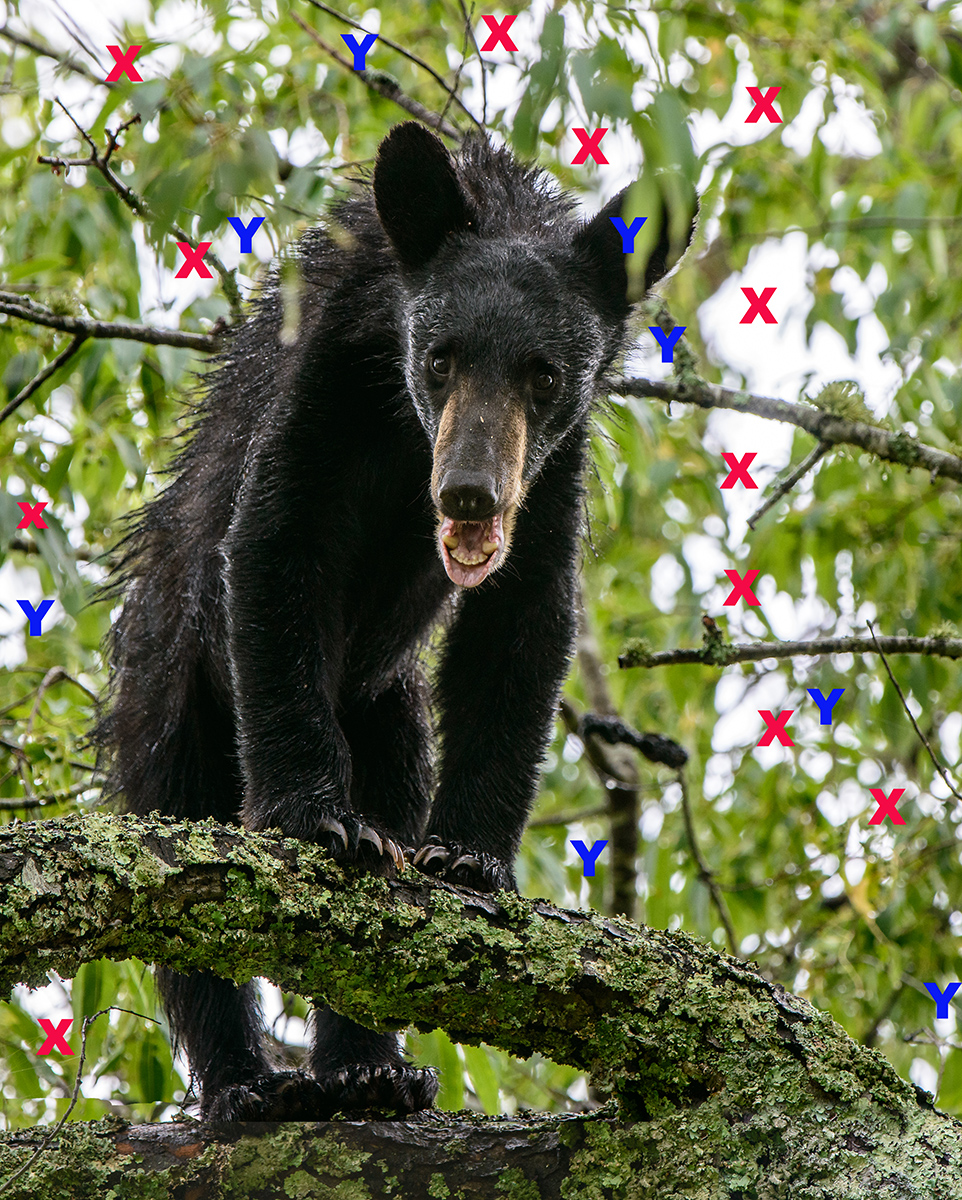
Case in point is my submission for this month (my poor skinny bear). To this end I decided to try using the new AI technology to solve the problem of burned out sky leaking through the tree leaves. This was not a simple click and be done with it. I tried that approach and it was horrible. After much trial and error I ended up with the following workflow. I started by selecting small areas (those marked with a red "x"). I used the lasso tool to make a selection and then without telling the program exactly what I wanted (for example "remove highlight") I simply asked the program to "generate". Sometimes it took 3-4 tries to get a result I was satisfied with and some times I reselected smaller areas. This was a long trial and error process. Note the number of "x" marks I used in trying to fix the overexposed areas. When I finished with the generate filling I then added some new selections (marked with a "y") and used Content aware Fill in these areas. It took about 45 minutes to do the editing. This is in addition to my usual editing of adjusting white and black points, opening shadows in the eyes, sharpening and other such edits.
In the end I didn't do anything I would have not tried to do prior to AI introduction. I think it is somewhat better than my old methods but didn't take quite as much time. I realize this is not legal if I was to enter the image in PSA Nature competitions, but all my images are not entered in anything. Many are just for my personal enjoyment so I can make edits as I please. Some are for clients and all they care about it what the image looks like. Anyway, since we have recently had several images submitted with these burned out highlights I thought you might like to see AI in a practical usage situation.
After looking over this original version, take another look at the submitted version. I would be interested in your thoughts.
|
Oct 13th |
 |
| 67 |
Oct 23 |
Reply |
Thanks Michael. This is one of those photos I remember with a smile. Do you know how awful a wet bear smells? After this shot, I do! |
Oct 12th |
| 67 |
Oct 23 |
Reply |
Thanks Richard. I think both the bear and I had one of those Ah Ha moments. It is good to get the blood flowing.
This was taken at the beginning of the blue and black berry season. The bears in the Smokies really feast on those berry and get fatter. Still Smoky bears are generally not as fat as the bears out west. But there are some really big boys around in the fall. |
Oct 12th |
| 67 |
Oct 23 |
Reply |
Love both the Grey Poupon and the "screaming like a girl" comments. They both made me laugh. Thanks for the comment about camera angle. Since most images are captured with the camera held at eye level anytime you can break this trend and use a unique camera angle it will help give the image interest and impact. I spend a lot of time down on the ground to get lower angles. In this case I didn't have to get physically lower since the bear was quite high but the results are the same---a unique camera angle. The other this that really helped with the image is something I recommend to all photographers--research your subject learn its behavior, diet its "tells" so you know what it is likely to do. I do this for all my subject, even studying birds by species. Knowing what they like to do helps you get better images. Using a long lens you can get eye level with a bear. the resulting drama is amazing. |
Oct 12th |
| 67 |
Oct 23 |
Comment |
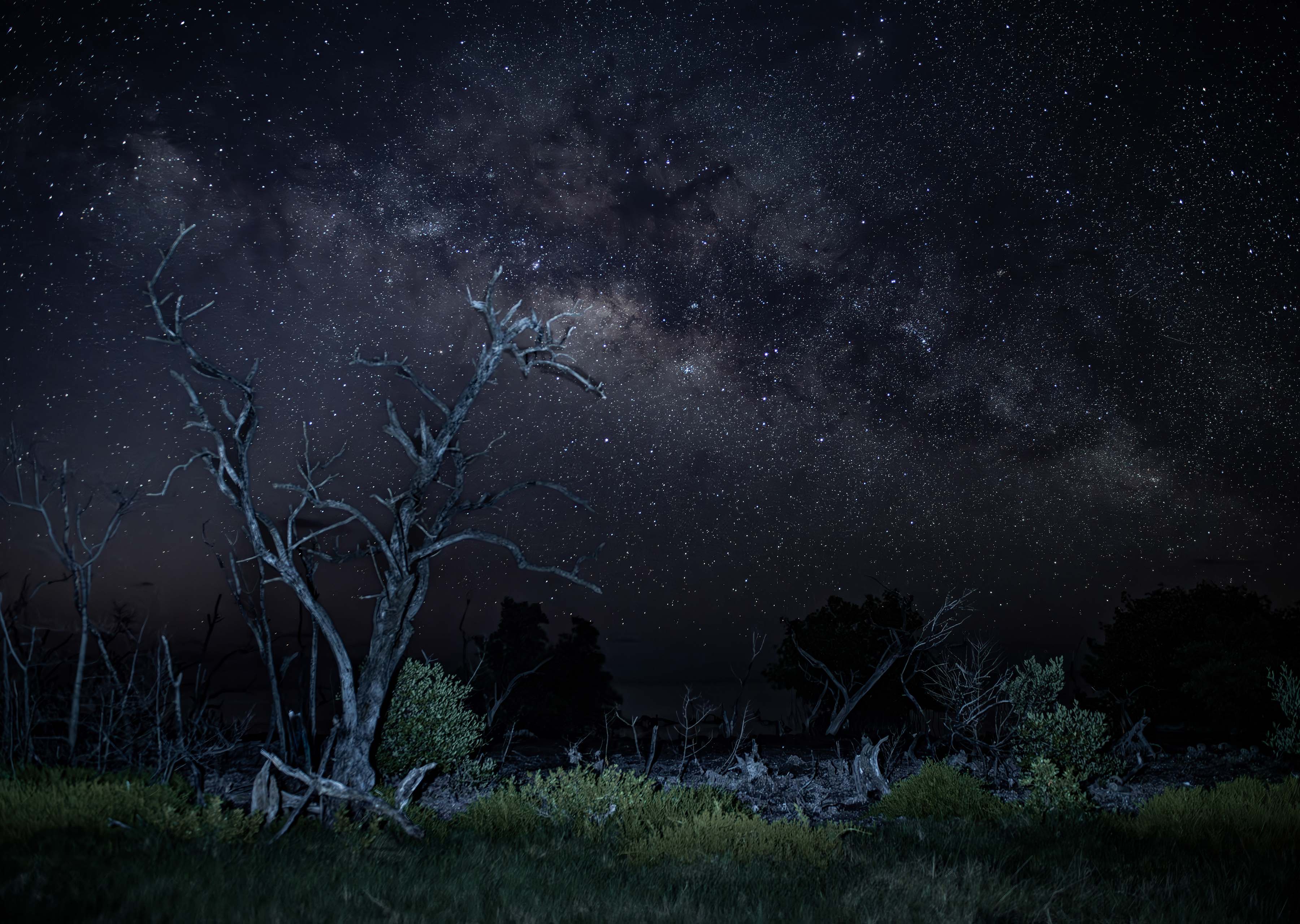
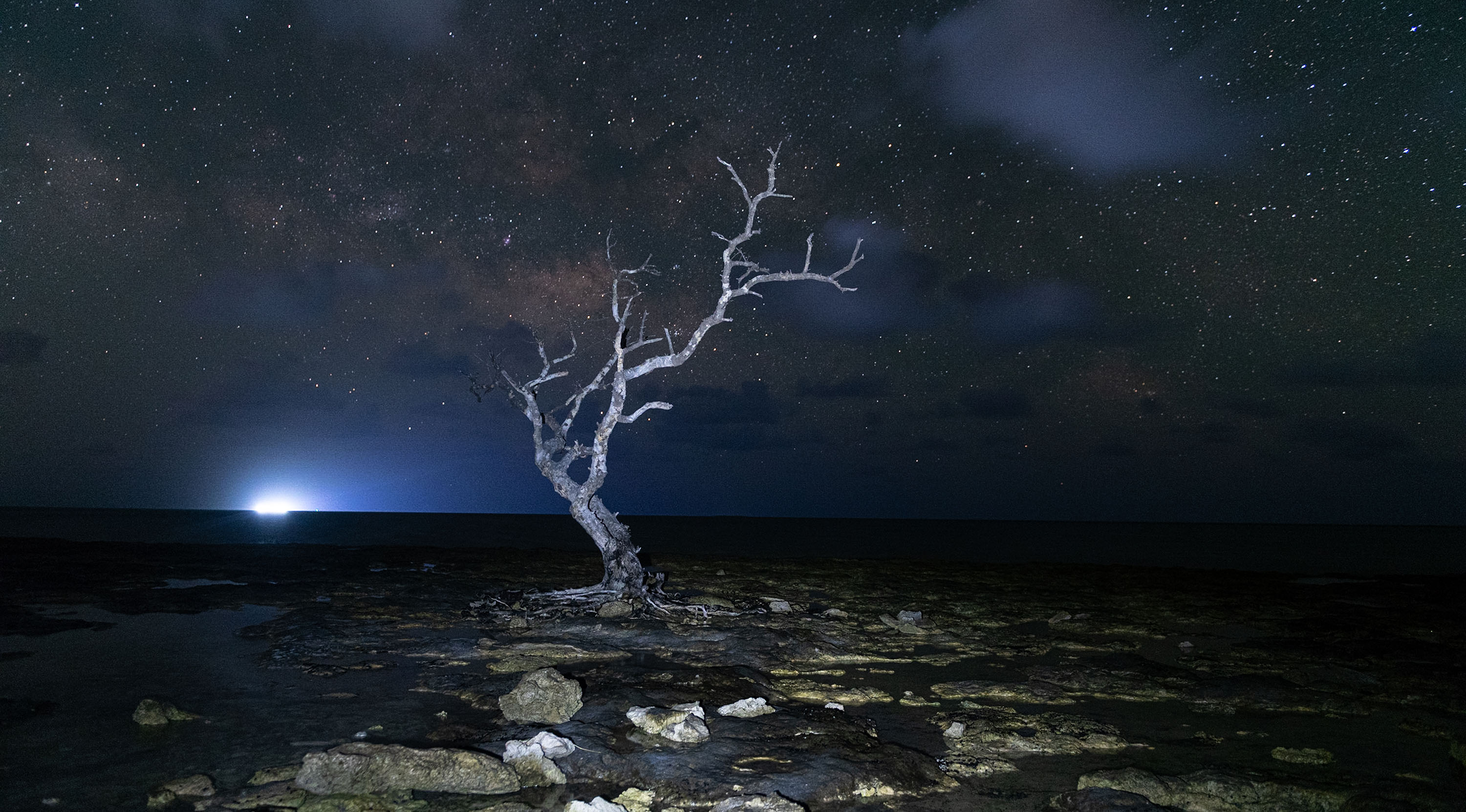
That is certainly a neat tree and it makes a wonderful foreground for the MW. The lamps used to side light the tree were perfectly place to provide a dramatic appearance.
Using the gear you had available you managed a remarkable shot. Having to use an aperture of 5.6 certainly makes shooting the MW difficult. It would appear that you had a pretty heavy cloud cover which hampered obtaining an ideal shot of the Galactic Core. To me it looks as if the Core may be a bit higher so I am asking if you have a shot with more of the sky? You also have quite of bit of "funky" colors (greens, purples) scattered throughout the frame You might get a better looking image by converting this to B/W and avoiding those extra colors.
Did you run this through a noise reduction program? It you did that may be why the rocks on the left seem to have a plastic look to them. You might try toning down the noise reduction and reducing that plastic look.
|
Oct 12th |
| 67 |
Oct 23 |
Reply |
GALEN ROWELL, the great 20th century (died 2002) mountaineer, naturalist and photographer who pioneered mountain, light and rugged landscape photography techniques preached that landscape photography should be realistic and not artificial. To this end he believed at the widest angle lens that should be used is 24mm. This is because anything wider introduces visual distortion and changes the appearance of the world.
I have spent many hours studying his images and techniques. His work is amazing and very thought provoking. I highly recommend spending several afternoons (at least) just turning pages in any of his books and reading his explanations as to why he took the shot |
Oct 4th |
| 67 |
Oct 23 |
Reply |
This looks better than the first, but could still use a bit of work. The approach you are describing in the first paragraph above it the way to go about it. |
Oct 3rd |
| 67 |
Oct 23 |
Reply |
Thanks Bud
This is an Appalachian Black Bear. They are smaller than the Alaskan bears but this is a young bear, probably recently kicked out by mom so he is even thinner. He will likely fatten up later in the summer. He was surprised to see/hear me, but he didn't feel threatened. He was up and I was down and leaving. And you are right, they don't jump out of trees.
I one had a bear climb onto a rock where I was napping out in a river and lay down next to me to take a nap of his own. We parted peacefully when I woke up. I also had one press his face against the mosquito mesh of my net in the middle of the night---it got kicked in the face and left. But those were my only close calls. The napping bear was a good size (close to 200lbs, the one I kicked was really small and young. |
Oct 3rd |
| 67 |
Oct 23 |
Comment |
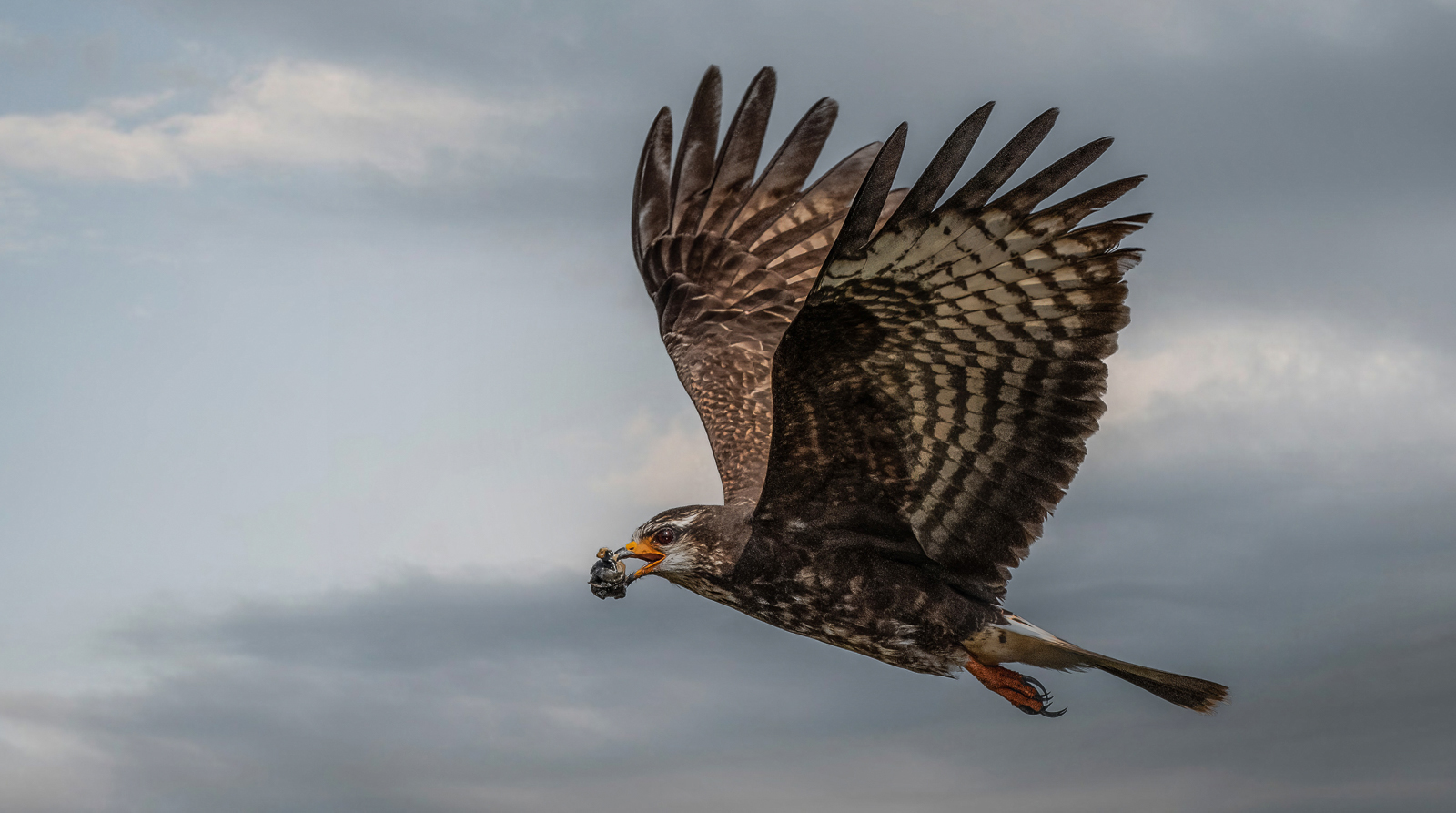
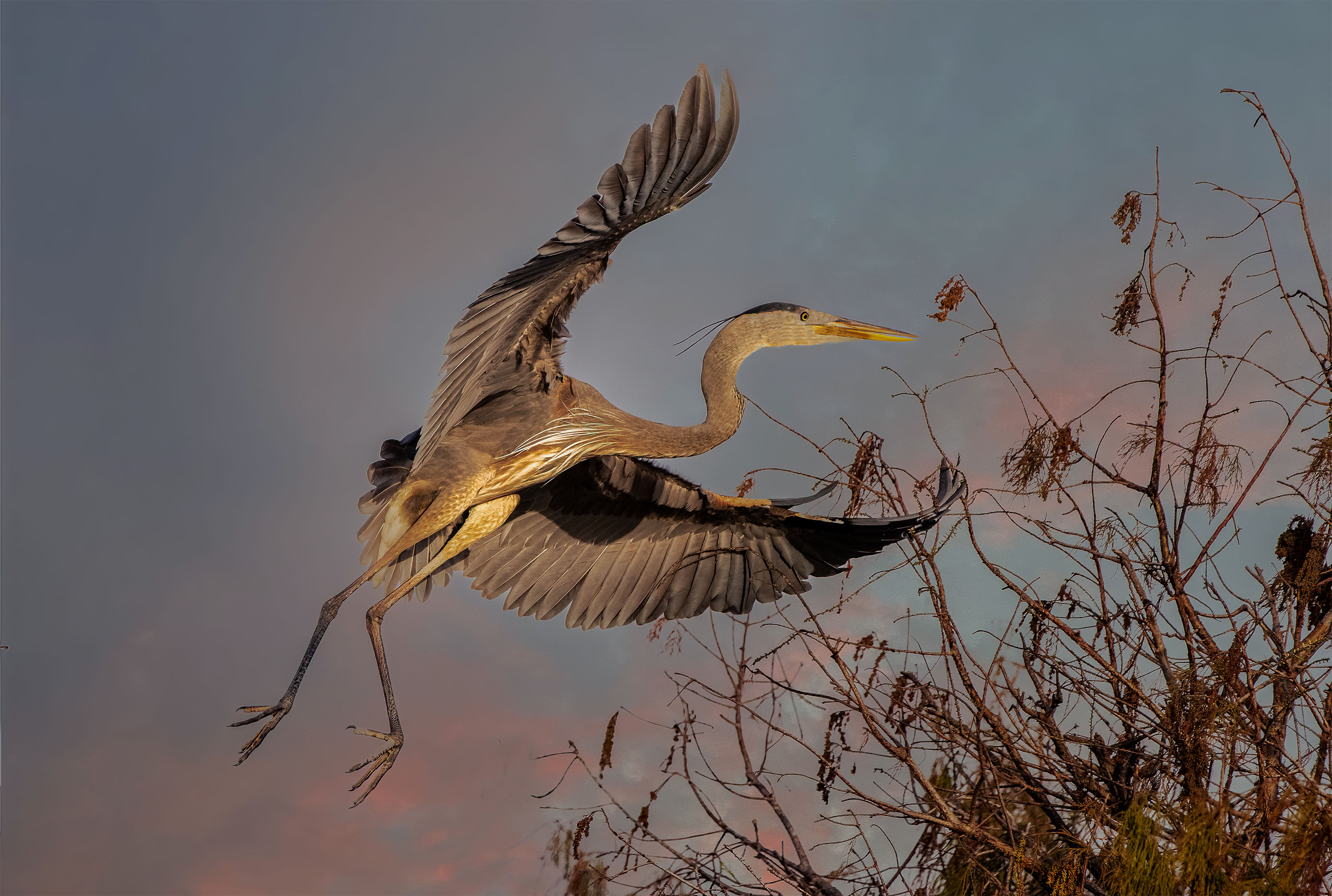
This is a wonderfully sharp eagle throughout the face, beak and upper wing. There might be a bit of burn on the white head but not enough to really matter. Since you mention that a fish is being transported, and I was able to find the fish, you might consider trying to open those shadows on the underside of the bird so the feet and prey are visible. You probably over did the shutter speed, 1/6400 is scary fast, and then the ISO could be a bit lower which would make recovery of the shadow areas a bit easier. |
Oct 3rd |
| 67 |
Oct 23 |
Comment |
First, I agree with the flipping for this image, it works much better this way. I just absolutely love the color palette. This sort of feels like a still life and all they colors blend in nicely. The rusty tone of the plants work well with the wings. I especially like that the background, while soft and blurred just retains enough detail to make it real and adds a bit of interest. The dark center leaf acts as a leading line to "point" the way to the butterfly while the final high leaf on the right serves to frame and hold the butterfly into the image. The center part of the image is wonderfully sharp, but I wish the two large round plant heads on the left were also sharp. You might also try to recover some detail on the white plant on the left as it seems a little but burned out.
I like this it just seems to fit nicely together with the composition you chose to assemble. |
Oct 3rd |
| 67 |
Oct 23 |
Comment |
You are right about the aperture. With that 20mm lens likely f11 would have been more than enough |
Oct 3rd |
| 67 |
Oct 23 |
Comment |
Way to bring some emotion into an image. This little cutie absolutely belongs on a magazine cover somewhere. That is an especially good thing as cropping this into a portrait format will get rid of the far to bright leaves.
The light on the face is something to simply die for. It is beautiful. The incredible sharpness of the face really brings out the emotion and lets the viewer fall in love with the monkey. You really did well handling the semi strong backlight coming through the leaves that had the potential to ruin the image. Visually I feel the bright leaves draw the eye away from the monkey and sort of act like a competing second subject.
I can offer two suggestions to try and solve that problem. You can try brushing down the exposure or even using a radial gradient and work on just the highlights. But the best approach would likely be using the adjustment brush and selecting a color range and than adjusting the color, hue and/or luminance to bring those wayward leaves into compliance.
You really hve a great image here. |
Oct 3rd |
| 67 |
Oct 23 |
Comment |
OK---YOU can like and fall in love with a wood stork. I'll photography them, but I really hate them. I've seen them gang up on an cormorant with young in her nest and attack and murder the entire family just to claim the nest. They take over entire areas of wetlands and drive out the other bird populations.---OK sorry for the rant
The good news is you got a really nice sharp image of a stork in flight. I can picture you tipping over backwards as the bird flew over your head (been there, done that) and I'm glad you stayed on your feet. The bad news is what you already know---the backlight. You did a good job of processing in that you brought back the sky, but in doing so you had to push the processing levels and thus produced a halo that turns the bird into an angel. (ugh!)
I'm quite pleased with your camera settings, especially that 1/2000 as that is what made it possible to get such a sharp image. You also nailed the focus on the big bird that filled your viewfinder.
There are several ways to get rid of halos once you produce them through your editing. The easiest is to work backwards through your processing step by step until you see the halo go away and then try to re-edit by trying a different approach or tools to continue your edition.
An alternative to the above is to make a new empty layer, select Darken mode and use the Clone tool. Only the areas that are lighter than the source area will be affected by the cloning. On the other hand, Lighten mode can be used to clone darker than the source area.
|
Oct 3rd |
| 67 |
Oct 23 |
Comment |
I've been thinking about this for the last two days, guess it is time to finally make some decisions.
First, if I was into doing sky replacements I would want this set of clouds in my collection. They are really grand. I'm glad you chose to drop the horizon and feature so much of the clouds. The "hint" of a sunrise is nice, but the rain storm is a special touch. This picture is all about clouds and they both dominate the skies and reduce the Badlands to an after thought.
I noted the comment that you shoot flat (noting wrong with that) and you do a lot of processing to recover the image.
Personally, I feel you didn't recover enough and for me the image still has a "flat" feel to it. Your HDR is quite well done as it does not have the HDR "look" to it so you earn some brownie points for that.
This is a really interesting image and I can well imagine standing there and taking in this scene and I can see why you like it. What I have been struggling with is why doesn't this just visually blow me away? I feel like it should, but I'm still sitting in my chair, so why?
I've come to the conclusion that it is the lens. The magic of a 20m super wide is it was designed to accentuate the foreground, and diminish the background. This lens does NOT show what the eye actually sees. The lens is trying to do what it was made to do, bring up the foreground and bury the background. In this image the sky is amazing and overpowering and simply cannot be "diminished" as it s too grand. The 20mm lens captured the grand expanse but because you are standing up and nothing in the image is actually close to you (it feels like you are standing on a ledge overlooking the scene) so the lens is doing its thing, trying to make a strong foreground and diminish the background and thus is is dwarfing the land, both breaking it down and pushing it away. For me, and just my opinion, if you were kneeling in the weedy spot to the right of the guy with the tripod the weeds would be the dynamic foreground, the striped and colored rocks would be bent around you (by the 20mm lens) and they would soar as pointy leading lines it to the sky that simply cannot be diminished and the i mage would blow everyone away with depth, textures, contrasts and color.
So much for my thoughts. I'm now in hiding behind the furniture so neither you or your wife can hit me with a rolling pin. It is a great image, and certainly worthy of a frame. |
Oct 3rd |
| 67 |
Oct 23 |
Reply |
Stephen--The reason I invited you to come along for the hike is because my Nikon D850 does not record in smell-o-vision nor does not have omni-directional capabilities so you miss out on the 360 degree experience. I just wanted you to really experience the full effect.
I'll let you know the next time I'm going out. :-) |
Oct 2nd |
| 67 |
Oct 23 |
Comment |
I never do something like this but I'm going to request that if possible you would make your comments on this image on or before the 13th of the month. I do have a reason, which will become clear by the 14th of October. Thanks for indulging me. |
Oct 1st |
9 comments - 7 replies for Group 67
|
19 comments - 12 replies Total
|